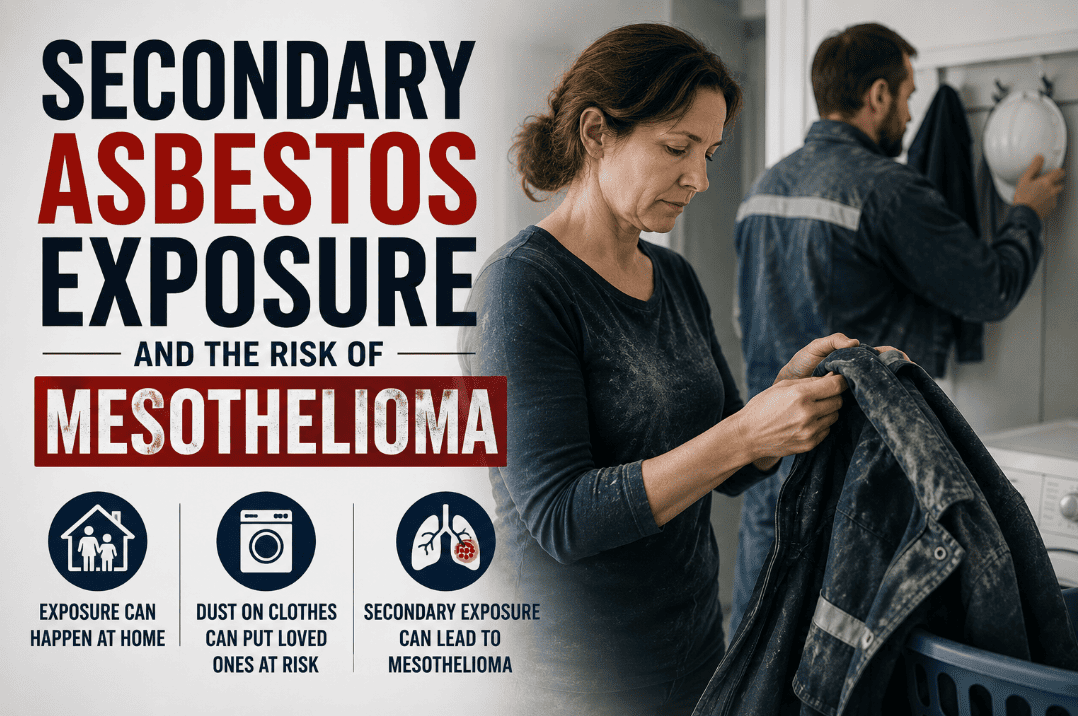
Secondary asbestos exposure, sometimes called take-home or para-occupational exposure, occurs when asbestos fibers are carried from a workplace into the home or other environments. Family members and others who never worked directly with asbestos can still inhale these fibers and face an increased risk of mesothelioma and related diseases. Because the fibers are microscopic and the resulting illness may not appear for decades, this form of exposure often goes unrecognized until a diagnosis is made.
What Secondary Asbestos Exposure Means
Primary exposure happens when a person works directly with asbestos-containing materials. Secondary exposure happens when fibers cling to clothing, hair, shoes, tools, or vehicles and are brought into the home. Once inside, the fibers can become airborne again during routine activities such as laundering clothes, cleaning, or simply moving around the house. Over time, household members may inhale or ingest these fibers without ever visiting a worksite.
Asbestos was widely used in insulation, flooring, roofing, cement products, and industrial equipment because of its heat resistance and strength. When those materials are disturbed, the fibers are released. Even small amounts carried home repeatedly can create ongoing low-level exposure.
How Secondary Exposure Is Linked to Mesothelioma
Mesothelioma is a cancer that develops in the thin lining around the lungs, abdomen, or heart. The primary known cause is asbestos. While most cases involve direct occupational contact, a meaningful number of diagnoses occur in people whose only exposure was through a family member’s work clothing or similar take-home routes.
There is no established safe level of asbestos exposure. Fibers that lodge in the mesothelium can cause chronic irritation and cellular changes that, many years later, lead to cancer. The typical latency period between first exposure and diagnosis is 20 to 50 years. This long delay means exposures that occurred decades ago continue to result in new cases today.
Who Faces Higher Risk
Certain groups are more likely to experience secondary exposure:
- Spouses and partners who regularly handled or laundered work clothes
- Children who lived in the same household and came into contact with contaminated items
- Other household members sharing living space with someone who worked around asbestos
- People living near industrial sites, mines, or demolition projects where fibers may have traveled through the air
Women have historically accounted for a larger share of secondary-exposure cases because they were less likely to hold the high-risk industrial jobs themselves yet often managed household laundry and cleaning. Residents of older homes or buildings undergoing renovation can also face indirect exposure if asbestos-containing materials are disturbed without proper controls.
Recognizing Possible Symptoms
Symptoms of mesothelioma related to secondary exposure are the same as those linked to primary exposure and often appear only after many years:
Pleural mesothelioma (lining of the lungs)
Persistent cough, shortness of breath, chest pain or tightness, fatigue, and fluid around the lungs.
Peritoneal mesothelioma (lining of the abdomen)
Abdominal pain or swelling, nausea, changes in bowel habits, and unexplained weight loss.
Because these signs can resemble more common conditions, anyone with a household history of asbestos-related work should mention that history to their physician if symptoms develop.
Long-Term Health Implications
Secondary exposure is often subtle and repeated over years. Fibers can remain in household dust and fabrics, creating ongoing contact. In addition to mesothelioma, this type of exposure can contribute to lung cancer and asbestosis. The emotional impact on families—uncertainty, anxiety about past contact, and concern for other household members—can also be significant.
Practical Steps to Prevent Secondary Exposure
Prevention focuses on stopping fibers from leaving the workplace and reducing contact once they are home:
- Workers should change out of work clothes and shower before leaving the job site whenever possible.
- Contaminated clothing should be kept separate, preferably laundered at work or handled with care at home using wet methods and HEPA-filtered vacuums.
- Work shoes and tools should not be brought into living areas.
- Employers should provide clean change areas, laundry facilities, and clear training about take-home risks.
- Household members should avoid shaking out work clothes indoors and should clean surfaces with damp methods rather than dry dusting.
During renovations of older homes, professional assessment of possible asbestos-containing materials further reduces risk.
Support and Legal Options After a Diagnosis
When mesothelioma is linked to secondary asbestos exposure, affected individuals and families may have pathways to seek compensation. These can include claims against the companies that manufactured or supplied the asbestos products and, in some situations, asbestos bankruptcy trust funds. Documentation of the primary worker’s job history and the household relationship is often important. Time limits for filing claims vary by state and generally begin from the date of diagnosis or from the date the connection to asbestos was reasonably discovered.
Medical care, emotional support, and accurate information about the illness remain essential regardless of legal options.
Bringing Greater Awareness to an Overlooked Risk
Secondary asbestos exposure demonstrates that the dangers of asbestos extend beyond the workplace. Family members who never handled the material themselves can still face serious health consequences decades later. Recognizing how fibers travel home, watching for symptoms, and taking practical steps to limit take-home contamination all help reduce future harm. For those already diagnosed, understanding the source of exposure supports both medical care and any evaluation of available compensation.
This information is provided for educational purposes only and is not a substitute for professional medical or legal advice. Individual circumstances differ, and qualified professionals should be consulted for personal guidance.