
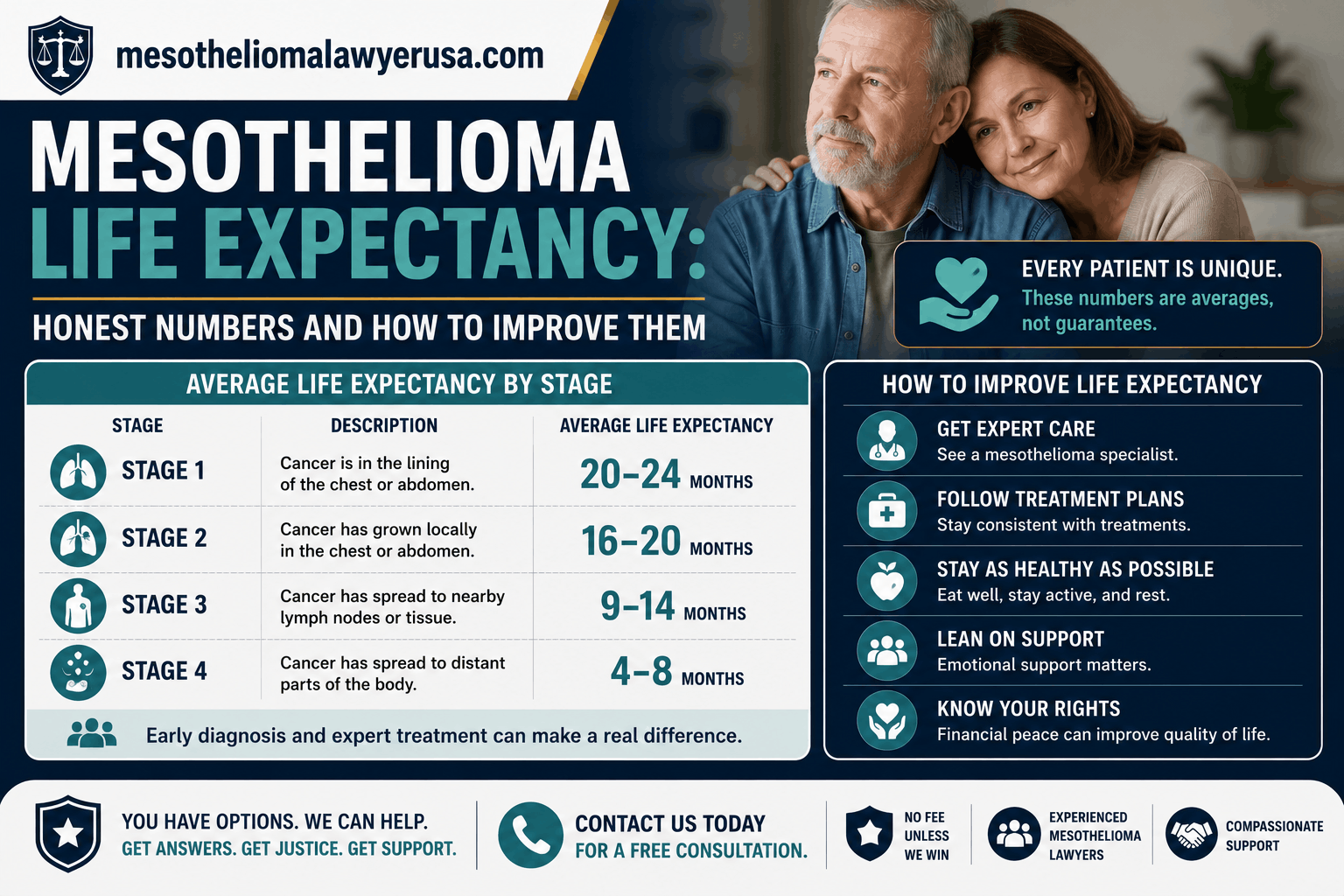
One of the first questions mesothelioma patients and their families ask after a diagnosis is about life expectancy. It is a difficult question, and it deserves an honest answer rather than vague reassurances. This guide provides real survival statistics, explains what factors most significantly affect prognosis, and describes evidence-based ways that some patients have meaningfully extended their survival beyond initial estimates.
What Is the Average Mesothelioma Life Expectancy?
Mesothelioma has historically carried a challenging prognosis, largely because most cases are diagnosed at an advanced stage when treatment options are more limited. General statistics show:
- The median survival time for mesothelioma patients is approximately 12 to 21 months from the time of diagnosis.
- Roughly 40 percent of mesothelioma patients survive one year after diagnosis.
- Approximately 20 percent survive two years after diagnosis.
- Around 10 percent of patients survive five years or longer after diagnosis.
These numbers represent averages across a broad population of patients with varying ages, stages, types, and access to treatment. Individual outcomes vary considerably, and many patients significantly outlive initial statistical expectations, particularly those who receive treatment at specialized mesothelioma centers and pursue aggressive multimodal therapy.
Why Mesothelioma Prognosis Is Often Challenging
Several factors contribute to the historically challenging prognosis associated with mesothelioma:
- Late-stage diagnosis is common because early symptoms are mild and easily mistaken for other conditions, meaning many patients are already at Stage 3 or Stage 4 when the disease is identified.
- Long latency period between asbestos exposure and diagnosis means many patients are older at the time of diagnosis, sometimes affecting their ability to tolerate aggressive treatment.
- Rapid progression characterizes some forms of mesothelioma, particularly pleural mesothelioma, where the disease can advance significantly within months.
Factors That Most Significantly Affect Life Expectancy
Understanding which factors influence prognosis helps patients and families have more informed conversations with their medical team and make empowered decisions about treatment.
Stage at Diagnosis
This is the single most significant factor affecting mesothelioma life expectancy. Patients diagnosed at Stage 1 have median survival times considerably longer than those diagnosed at Stage 3 or Stage 4. This is why early detection makes such a meaningful difference.
Type of Mesothelioma
Peritoneal mesothelioma patients treated with cytoreductive surgery and HIPEC have shown notably improved survival outcomes in recent years, with some studies showing five-year survival rates exceeding 50 percent for patients who respond well to this combined treatment approach.
Cell Type
Mesothelioma tumors are classified by their cellular structure, and this classification significantly affects prognosis. The three main cell types are:
- Epithelioid cells — the most common type, generally associated with the most favorable prognosis among mesothelioma cell types, with better response to treatment.
- Sarcomatoid cells — a more aggressive cell type, generally associated with shorter survival and more limited treatment response.
- Biphasic cells — containing a mix of epithelioid and sarcomatoid cells, with prognosis falling between the other two types depending on the proportion of each cell type present.
Overall Health and Age
Patients in good overall health at the time of diagnosis are generally better able to tolerate aggressive treatment approaches, including surgery and combined therapy regimens, which are associated with better outcomes. Younger patients also tend to tolerate intensive treatment more effectively than older patients, though age alone is never a definitive barrier to treatment consideration.
Treatment Received
Patients who receive multimodal treatment — combining surgery, chemotherapy, and radiation — at specialized mesothelioma treatment centers consistently show better survival outcomes than patients who receive limited treatment or treatment from centers without specific mesothelioma expertise. Access to emerging treatments such as immunotherapy and participation in clinical trials also influences outcomes meaningfully.
How Some Patients Improve Their Life Expectancy
While no approach can guarantee specific outcomes, there are evidence-based strategies that have helped some mesothelioma patients live longer and better than initial statistics might suggest.
Seek Treatment at a Specialized Mesothelioma Center
This single factor may be the most impactful decision a newly diagnosed patient can make. Mesothelioma is rare enough that general oncologists and community hospitals have limited experience with it. Specialized cancer centers with dedicated mesothelioma programs have treated far more patients with this specific disease, have access to the most current treatment protocols, and can offer clinical trial participation that may not be available elsewhere.
Pursue Multimodal Treatment When Eligible
Research consistently shows that patients who receive combined treatment approaches — particularly surgery followed by or combined with chemotherapy — tend to achieve better survival outcomes than those receiving a single treatment modality. Discussing the full range of potentially eligible treatment combinations with a mesothelioma specialist is essential to ensuring no viable option is overlooked.
Explore Clinical Trials
Clinical trials investigating new treatment approaches for mesothelioma are ongoing at major cancer centers throughout the United States. Immunotherapy drugs, targeted therapies, and novel combinations of existing treatments are being studied, and some patients have achieved remarkable outcomes through participation in trials. Ask your medical team specifically about current trials for which you may be eligible based on your specific type, stage, and cell type.
Consider Immunotherapy
Immunotherapy has emerged as one of the most promising treatment developments for mesothelioma in recent years. The combination of nivolumab and ipilimumab, two immunotherapy drugs, received approval for mesothelioma treatment and has shown meaningful survival improvements for some patients, particularly those with certain tumor characteristics. Discuss whether immunotherapy is appropriate for your specific case with your oncologist.
Maintain Overall Health During Treatment
Physical condition during treatment affects both treatment tolerance and outcomes. While this must always be guided by your medical team given your specific condition, general supportive measures such as maintaining nutrition, staying as physically active as your condition allows, and addressing mental and emotional health all contribute to overall resilience during treatment.
Honest Perspective: Statistics Describe Populations, Not Individuals
One of the most important things to understand about mesothelioma survival statistics is that they describe averages across large populations of patients, not individual destinies. Every patient who has survived five, ten, or even fifteen years with mesothelioma was once part of a statistical population whose median survival was much shorter. Individual responses to treatment, biological factors, and access to specialized care all contribute to outcomes that can differ significantly from population averages.
This is not false hope — it is an accurate reflection of the genuine variability in mesothelioma outcomes, and it is precisely why pursuing the most aggressive and specialized treatment possible, while simultaneously securing your family’s financial future through legal compensation, remains the most empowering approach available.
The Relationship Between Life Expectancy and Legal Timing
Understanding prognosis also has direct relevance to your legal case. Courts frequently grant expedited scheduling for mesothelioma patients with serious diagnoses, recognizing the urgency of ensuring compensation reaches patients and families while patients are still alive to benefit from it. If your prognosis is particularly serious, your lawyer can request priority scheduling specifically because of your medical situation. This is one of many reasons why contacting a mesothelioma lawyer early — ideally within days of diagnosis — is so important.
Final Thoughts: Numbers Are a Starting Point, Not an Ending
Mesothelioma life expectancy statistics are important information, but they are a starting point for informed decision-making, not a predetermined verdict. Patients who pursue specialized treatment, explore all available options including clinical trials, maintain their overall health as much as possible, and secure comprehensive legal and financial support give themselves every possible advantage in navigating this diagnosis.
Your medical team, specialized mesothelioma treatment centers, and an experienced legal team all play essential roles in maximizing both the length and quality of your life after diagnosis.
Medical and Legal Disclaimer: This article is for informational purposes only and does not constitute medical or legal advice. Survival statistics are general population averages and do not predict individual outcomes. Always consult a qualified mesothelioma specialist for guidance specific to your diagnosis and condition. No physician-patient or attorney-client relationship is formed by reading this content.