Fire safety is a critical part of workplace protection for both office and industrial employees. Fires can start from electrical problems, flammable materials, machinery, or human error and can cause serious injuries, property damage, and loss of life. In many older buildings and industrial facilities, another hidden risk is also present: asbestos-containing materials. When a fire damages insulation, ceiling tiles, flooring, or other building components, asbestos fibers can be released and later contribute to diseases such as mesothelioma. Understanding fire prevention and response, while remaining aware of possible asbestos hazards, helps create a safer work environment.
Why Fire Safety and Asbestos Awareness Matter Together
Workplace fires pose immediate dangers from flames, heat, and smoke. In structures built before the 1980s, fire can also disturb asbestos materials that were commonly used for insulation and fireproofing. Inhaling those fibers raises the long-term risk of mesothelioma, lung cancer, and asbestosis. Strong fire safety practices protect workers from acute injury and help limit secondary exposure to hazardous materials that may be present in older workplaces.
Fire Safety Guidelines for Office Workers
Office settings have their own common fire risks, often linked to electrical equipment and stored materials.
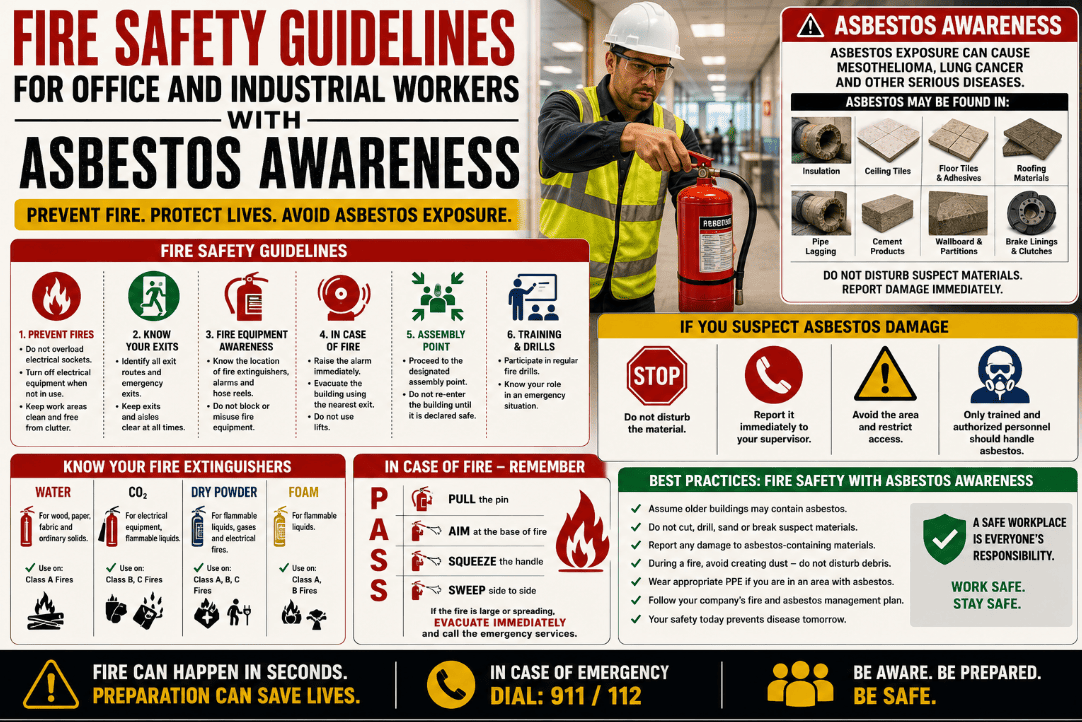
1. Keep Exit Routes Clear
Blocked hallways, stairwells, and doorways slow evacuation. Keep these paths free of boxes, furniture, and equipment at all times. Check regularly for new obstructions.
2. Use Electrical Equipment Safely
Overloaded outlets, damaged cords, and unattended devices are frequent causes of office fires. Avoid connecting multiple power strips together, unplug equipment when not in use, and report frayed cords or faulty outlets promptly.
3. Store Combustible Materials Properly
Paper, cleaning supplies, and aerosols can fuel a fire. Keep them away from heat sources and dispose of waste in appropriate containers. Clutter also makes it harder to notice damaged building materials that might contain asbestos.
4. Participate in Fire Drills
Regular drills teach employees the fastest and safest way out of the building. Know the primary and secondary exit routes from your work area and the designated assembly point outside.
5. Understand Fire Extinguisher Use
Learn the PASS method (Pull, Aim, Squeeze, Sweep) and know the location of the nearest extinguisher. Only attempt to fight a small fire if you have been trained and it is safe to do so. Otherwise, evacuate and call for help.
Fire Safety Guidelines for Industrial Workers
Industrial sites often involve machinery, chemicals, and dust that increase fire risk. Many older facilities also contain asbestos in insulation, gaskets, or structural materials.
6. Handle Flammable and Hazardous Materials Carefully
Store chemicals according to safety guidelines, keep containers labeled, and use required protective equipment. Proper handling reduces both fire risk and the chance of disturbing nearby asbestos-containing materials.
7. Maintain Machinery and Keep Work Areas Clean
Overheating equipment and accumulated dust or debris can start fires. Perform regular maintenance, clean work areas, and keep flammable materials away from machines. Report any damaged insulation or building components that may contain asbestos.
8. Follow Hot Work Safety Procedures
Welding, cutting, and grinding produce sparks and heat. Obtain required permits, use fire-resistant blankets or screens, keep extinguishers nearby, and inspect the area before and after the work. These precautions also help prevent damage to surrounding materials that might release asbestos fibers.
9. Ensure Adequate Ventilation
Good airflow reduces the buildup of flammable vapors and helps control dust. Report ventilation problems and avoid working in confined spaces where vapors or fibers could concentrate.
10. Know and Practice the Emergency Response Plan
Learn alarm signals, evacuation routes, assembly points, and the location of first-aid and firefighting equipment. Participate in site-specific training so responses become automatic during an emergency.
Common Causes of Workplace Fires
Fires most often start from:
- Electrical faults or overloaded circuits
- Human error such as unattended equipment or improper storage
- Chemical reactions or spills
- Sparks from hot work or machinery
Recognizing these triggers allows employees to take preventive action every day.
The Added Risk of Asbestos During and After a Fire
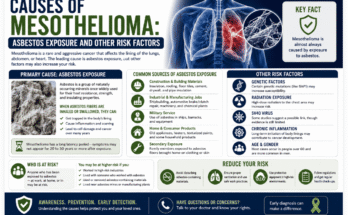
In older offices and industrial buildings, asbestos was frequently used in insulation, fireproofing, ceiling tiles, and flooring. A fire can damage these materials and release microscopic fibers into the air and debris. Inhaling those fibers increases the long-term risk of mesothelioma. After any fire or significant structural damage, only trained professionals should handle cleanup of potentially asbestos-containing materials. Workers should avoid disturbing soot, insulation, or debris until the area has been properly assessed.
Health Risks of Workplace Fires
Immediate dangers include burns, smoke inhalation, and injuries during evacuation. Longer-term concerns can arise if asbestos fibers are released and inhaled. Consistent fire prevention and careful post-incident handling reduce both sets of risks.
Employer Responsibilities
Employers are expected to provide fire extinguishers, alarms, sprinklers, clear exits, and regular training. They should also identify asbestos-containing materials in older facilities and ensure that any disturbance—whether from routine work or after a fire—is handled by qualified personnel. Workers should report safety gaps so they can be corrected.
Rights After a Fire-Related Injury or Illness
Employees injured in a workplace fire may be eligible for workers’ compensation benefits that cover medical care and a portion of lost wages. If an occupational disease such as mesothelioma later develops and can be linked to asbestos exposure at work (including exposure that occurred during or after a fire), additional legal options may exist. Prompt reporting of the incident and good record-keeping support any later claims. Time limits apply, so timely action is important.
Building a Safer Workplace
Fire safety protects lives and property in both office and industrial settings. Keeping exits clear, using electrical equipment responsibly, storing materials safely, practicing drills, knowing how to use extinguishers, handling hazardous substances carefully, maintaining equipment, following hot-work rules, ensuring ventilation, and knowing emergency plans all reduce risk. In older buildings, these same practices also help limit the chance that a fire will release asbestos fibers that could contribute to mesothelioma years later.
This information is provided for educational purposes only and is not a substitute for professional safety training, medical advice, or legal counsel. Workplace conditions and individual circumstances vary. Follow employer policies and applicable regulations, and consult qualified professionals when needed.