Asbestos remains a serious occupational hazard in many workplaces across the United States. Although its new uses have been heavily restricted, the material is still present in older buildings, ships, factories, and equipment. When asbestos-containing materials are disturbed, microscopic fibers can become airborne. Inhaling those fibers raises the risk of mesothelioma, lung cancer, and asbestosis—diseases that often appear 20 to 50 years later. Practical safety measures protect workers today and reduce the chance of serious illness in the future.
Why Preventing Asbestos Exposure Matters
Asbestos fibers that lodge in the lungs or abdomen can cause chronic inflammation and, over time, cancerous changes. The large majority of mesothelioma cases are linked to occupational exposure. Construction, shipyard, industrial, and maintenance work continue to involve contact with legacy materials. Preventing exposure protects individual health and helps employers meet their responsibility to provide a safe workplace.
Who Faces Higher Risk
Certain jobs carry greater potential for contact with asbestos:
- Construction and renovation workers handling insulation, flooring, roofing, or demolition in pre-1980 buildings
- Shipyard and maritime workers repairing or dismantling older vessels
- Industrial and factory employees working around older boilers, pipes, or machinery
- Maintenance staff who disturb ceiling tiles, pipe wrapping, or other building materials
Even employees in older office buildings can face secondary exposure if materials deteriorate or are improperly handled during repairs.
Top Safety Tips to Prevent Asbestos Exposure
1. Identify Asbestos-Containing Materials Before Work Begins
Assume that insulation, floor tiles, ceiling tiles, pipe wrapping, roofing, and certain cement products in buildings constructed before 1980 may contain asbestos until testing proves otherwise. Have certified professionals perform surveys and sampling before renovation, demolition, or major maintenance.
2. Use Proper Personal Protective Equipment
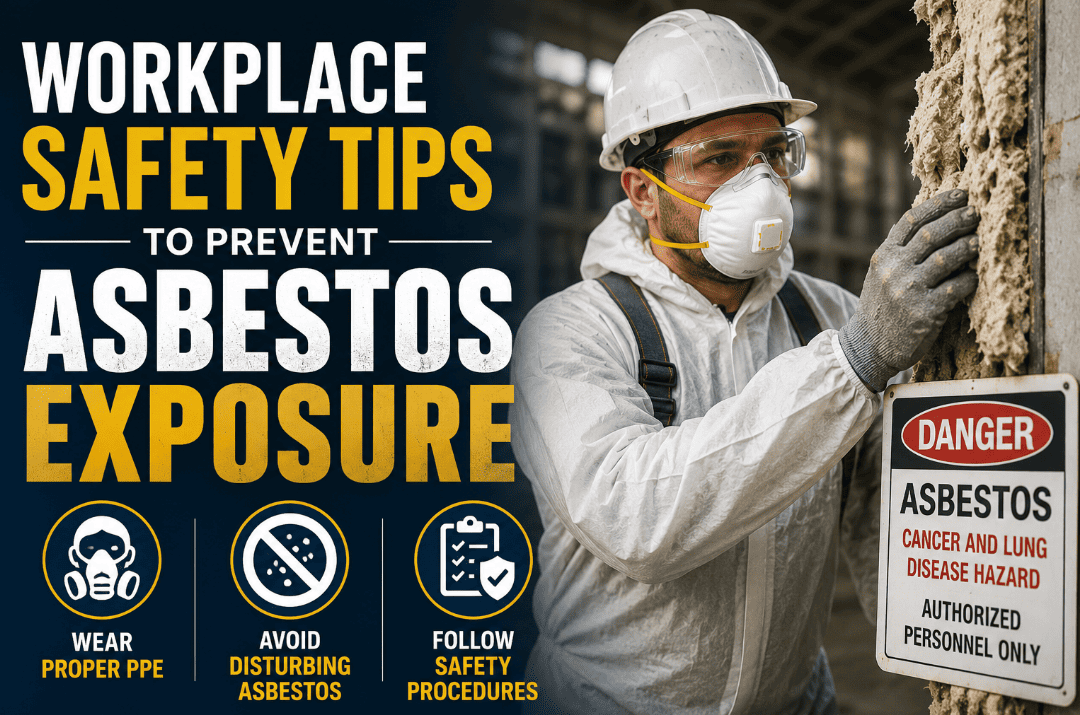
When work near asbestos cannot be avoided, wear a NIOSH-approved respirator suitable for asbestos, disposable coveralls, gloves, and eye protection. Inspect equipment before each use. Dispose of contaminated disposable gear properly so fibers are not carried to other areas or taken home.
3. Keep Materials Wet During Handling
Wet methods significantly reduce the amount of dust released. Use water sprays or amended water when cutting, sanding, or removing suspect materials. Proper containment of runoff prevents secondary problems.
4. Create Controlled Work Areas
Isolate the work zone with plastic sheeting and, when required, negative-air pressure systems. Seal openings to prevent fibers from spreading into clean areas of the building. Limit access to trained personnel only.
5. Follow Safe Removal and Disposal Practices
Asbestos removal should be performed by licensed abatement contractors whenever possible. Waste must be double-bagged, clearly labeled, and taken to approved disposal facilities. Avoid breaking materials into small pieces that create more dust.
6. Maintain Good Ventilation and Dust Control
Use local exhaust ventilation and HEPA-filtered equipment to capture fibers at the source. Never dry-sweep or use compressed air on surfaces that may contain asbestos. HEPA vacuums are the appropriate tool for cleanup.
7. Complete Required Training
Participate in asbestos-awareness training and any additional instruction required for the specific tasks performed. Understanding how to recognize suspect materials and how to respond reduces accidental exposure. Report possible asbestos materials promptly.
8. Monitor Air Quality When Necessary
During and after work that may disturb asbestos, air monitoring helps confirm that fiber levels remain within acceptable limits. Industrial hygienists or qualified technicians should perform this testing according to established protocols.
9. Practice Strict Hygiene
Shower and change into clean clothes before leaving the worksite whenever exposure is possible. Keep work clothes separate and sealed. These steps prevent fibers from traveling home and exposing family members.
10. Follow Applicable Regulations
Adhere to OSHA asbestos standards and EPA requirements for handling, removal, and disposal. Keep records of training, inspections, and abatement work. Compliance protects workers and demonstrates due diligence.
Health Risks Linked to Asbestos Exposure
Inhaled asbestos fibers can lead to:
- Mesothelioma, a cancer of the lining of the lungs or abdomen
- Lung cancer, with risk further elevated among smokers
- Asbestosis, progressive scarring of lung tissue that makes breathing difficult
Symptoms such as persistent cough, chest pain, shortness of breath, or unexplained weight loss may appear many years after exposure. Anyone with a history of possible asbestos contact should mention it to their physician.
Employer Responsibilities
Employers are expected to identify asbestos hazards, provide appropriate training and protective equipment, and ensure that any disturbance of asbestos-containing materials is handled by qualified personnel. Failure to meet these obligations can result in regulatory penalties and legal claims.
Options After Exposure-Related Illness
Workers who develop mesothelioma or another asbestos-related disease may be eligible for workers’ compensation benefits. Additional avenues can include claims against manufacturers or suppliers of asbestos products and asbestos bankruptcy trust funds in some cases. Time limits for filing claims vary by state and generally begin from the date of diagnosis or from the date the connection to asbestos was reasonably discovered. Keeping records of job sites, tasks, and medical care supports any later evaluation of available options.
Building Safer Work Practices
Preventing asbestos exposure depends on consistent, practical habits: identifying materials before work starts, using proper protective equipment, controlling dust with wet methods and containment, following safe removal and disposal procedures, maintaining ventilation, completing training, monitoring air quality when needed, practicing good hygiene, and complying with regulations. These steps protect workers from both immediate hazards and the long-term risk of mesothelioma and related diseases.
This information is provided for educational purposes only and is not a substitute for professional safety training, medical advice, or legal counsel. Workplace conditions and individual circumstances vary. Follow employer policies and applicable regulations, and consult qualified professionals when needed.