Mesothelioma is a rare, aggressive cancer most often linked to asbestos exposure. Beyond the physical effects of the disease and its treatment, many people experience significant emotional strain. Anxiety, depression, financial worry, and feelings of isolation are common. When an employee is diagnosed, these challenges can affect both the individual and the wider workplace. Employers who respond with practical support and clear communication help create an environment where affected workers feel respected and able to focus on their health.
How Mesothelioma Affects Mental Health
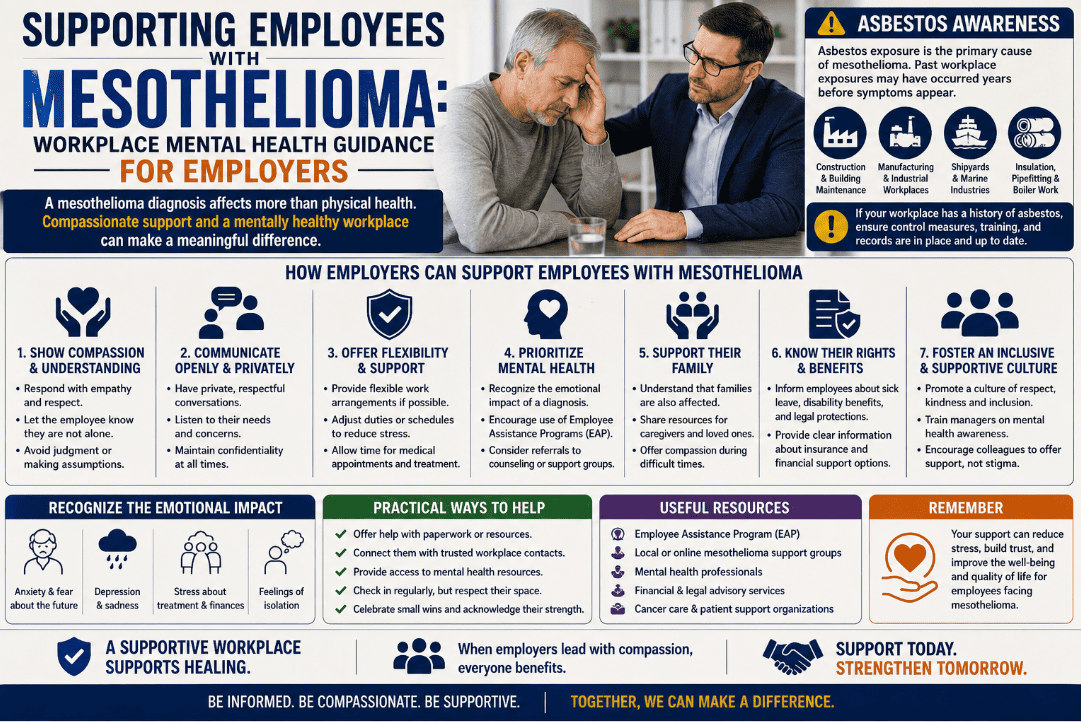
Mesothelioma frequently appears decades after asbestos exposure, often at a stage when people are still working or recently retired. The diagnosis can bring:
- Anxiety about the future and treatment outcomes
- Depression linked to physical symptoms, loss of independence, or changes in daily life
- Stress over medical costs and reduced income
- A sense of isolation if colleagues do not understand the illness
- Grief experienced by the employee and by coworkers
These reactions are normal responses to a serious diagnosis. Recognizing them allows employers to offer meaningful help rather than leaving individuals to cope alone.
Why Employer Support Makes a Difference
A workplace that acknowledges both the medical and emotional impact of mesothelioma benefits everyone. Supportive practices can:
- Help employees remain engaged for as long as they are able and choose to work
- Reduce stigma around serious illness
- Demonstrate that the organization values its people
- Align with legal requirements for reasonable accommodations
When managers and coworkers respond with understanding, the overall atmosphere of the workplace improves.
Practical Ways Employers Can Help
1. Make Mental Health Resources Easy to Access
Offer employee assistance programs, confidential counseling, or referrals to professionals familiar with chronic or life-limiting illness. Promote these resources regularly so employees know they exist and feel comfortable using them.
2. Provide Flexible Work Options
Treatment schedules, fatigue, and medical appointments often require adjustments. Remote work, modified hours, reduced schedules, or temporary changes in duties can make continued employment more manageable. Work with the employee and human resources to create a plan that fits the individual’s needs and medical advice.
3. Educate Managers and Staff
Basic information about mesothelioma and its emotional effects reduces misunderstanding. Short training sessions or written materials can help colleagues respond with empathy rather than discomfort. Any personal stories shared should be voluntary and used only with the employee’s clear consent.
4. Assist with Practical and Financial Questions
Point employees toward available benefits such as short-term or long-term disability, workers’ compensation (when applicable), and information about medical leave. Avoid giving legal advice; instead, direct people to qualified resources so they can explore options related to their specific situation.
5. Foster an Open and Respectful Culture
Encourage regular, private check-ins between managers and the employee. Peer support or simple expressions of concern from coworkers can reduce feelings of isolation. Recognition of the person’s contributions, rather than focus solely on the illness, helps maintain dignity.
6. Support Overall Wellness
Stress-management resources, quiet spaces for rest, and access to wellness programs benefit employees dealing with serious illness. These offerings should remain optional and non-intrusive.
7. Accommodate Medical Needs
Coordinate with the employee and their healthcare providers to adjust workloads, allow necessary leave, or provide a quieter workspace when needed. Reasonable accommodations under applicable disability laws are both a legal requirement and a practical way to support continued employment.
8. Watch for Signs of Burnout and Overwhelm
Chronic illness increases the risk of emotional exhaustion. Scheduled check-ins and confidential ways for employees to share concerns help identify problems early so adjustments can be made.
Legal and Ethical Considerations
Under the Americans with Disabilities Act and similar laws, employers are generally required to provide reasonable accommodations for employees with serious health conditions such as mesothelioma, unless doing so would cause undue hardship. Supporting mental health needs falls within this framework. Clear policies, consistent application, and good documentation protect both the employee and the organization.
Common Challenges and Practical Solutions
Some workplaces face limited budgets or uncertainty about how to begin. Starting with existing employee assistance programs, flexible scheduling, and manager training requires relatively modest resources. External partnerships with counseling providers or disease-specific organizations can extend support without large internal investment. Open communication reduces stigma more effectively than formal programs alone.
Benefits of a Supportive Approach
When employees facing serious illness receive practical and emotional support, they are more likely to remain engaged for as long as their health allows. Coworkers observe that the organization treats people with care, which strengthens overall trust and morale. A consistent, compassionate response also reduces the risk of misunderstandings that can lead to formal complaints.
Moving Forward with Care
Mesothelioma brings physical, emotional, and practical challenges. Employers who offer accessible mental health resources, flexible arrangements, education, and a respectful culture help employees navigate this difficult time with greater dignity. These steps protect individual well-being and contribute to a healthier workplace for everyone.
This information is provided for educational purposes only and is not a substitute for professional medical, legal, or human-resources advice. Individual situations vary. Employers should consult qualified professionals and follow applicable laws when developing policies and accommodations.