
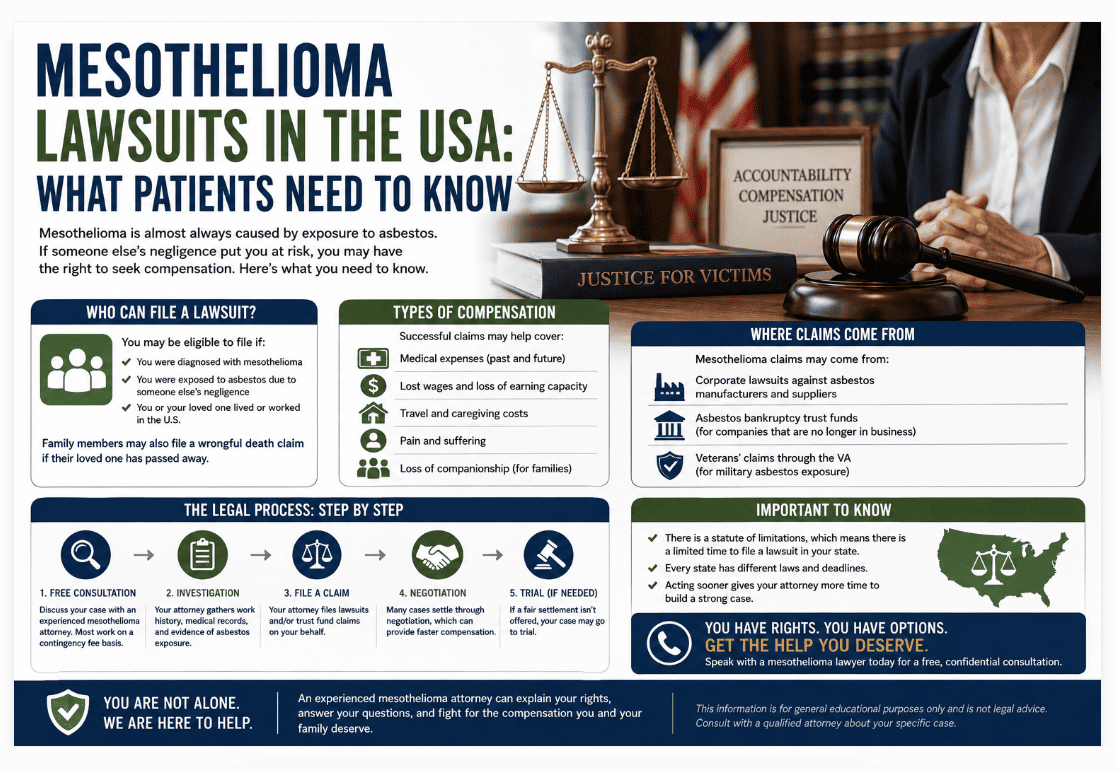
A mesothelioma diagnosis brings medical, emotional, and financial pressure at the same time. Many patients and families eventually ask whether legal action is possible. In most cases the answer is yes. Mesothelioma is almost always linked to asbestos exposure, and decades of evidence show that many companies continued to use the material long after they knew the risks. Lawsuits and trust-fund claims exist to hold those companies accountable and to help cover the real costs of the disease.
This guide explains the main types of claims available in the United States, who can file, how the process works, and what patients and families should expect. The information is general. Every case is different, and state laws vary. Speaking with an experienced attorney remains the most reliable way to evaluate individual options.
Why Mesothelioma Lawsuits Exist
Asbestos fibers, once inhaled or swallowed, can remain in the body for decades. Over time they cause chronic irritation that may lead to mesothelioma. The mineral was widely used in construction materials, insulation, shipbuilding, automotive parts, and industrial products. Internal company documents later revealed that some manufacturers and employers understood the health dangers years before they issued meaningful warnings or provided adequate protection.
When a company fails to warn about known hazards or fails to protect workers, the legal system allows injured people to seek compensation. These claims cover medical expenses, lost income, pain and suffering, and, in wrongful-death cases, the losses suffered by surviving family members. The goal is both financial recovery and accountability.
Main Types of Claims
Patients and families usually pursue one or more of the following paths.
Personal injury lawsuits are filed by living patients. These claims seek compensation for medical costs, lost wages, reduced earning capacity, and the physical and emotional impact of the disease. Most personal injury cases settle before trial.
Wrongful death lawsuits are brought by surviving spouses, children, or other eligible family members after a patient dies from mesothelioma. These claims address funeral expenses, loss of financial support, and loss of companionship. Filing deadlines are measured from the date of death and differ by state.
Asbestos bankruptcy trust claims form a separate administrative system. When asbestos companies filed for bankruptcy, courts required them to set aside funds for current and future victims. Dozens of these trusts remain active and hold substantial assets. Claims are submitted with medical and exposure documentation and are reviewed according to each trust’s rules. Many patients qualify for payments from multiple trusts because they were exposed to products from several manufacturers. Trust claims usually move faster than traditional lawsuits and do not require a court appearance.
Veterans’ claims apply when exposure occurred during military service. Veterans may pursue benefits through the Department of Veterans Affairs and, in many cases, also file civil claims against the private companies that supplied asbestos products to the military.
It is common, and often advantageous, to pursue trust-fund claims and civil lawsuits at the same time.
Who Can File
Eligibility rests on two core elements: a confirmed mesothelioma diagnosis and a credible history of asbestos exposure linked to specific products or workplaces.
A pathology report establishing the diagnosis is essential. Exposure evidence can include employment records, military service records, Social Security earnings statements, union documents, product identification, and statements from co-workers. Secondary or “take-home” exposure—fibers brought home on a worker’s clothing—is recognized in many jurisdictions and has supported successful claims by spouses and other family members.
Timing is critical. Every state has a statute of limitations. In most places the deadline is one to three years from the date of diagnosis or from the date the patient reasonably discovered that asbestos caused the illness. Wrongful-death deadlines are measured from the date of death. Missing these deadlines usually bars the claim permanently. Prompt consultation with counsel protects the right to file.
The Typical Legal Process
Most mesothelioma cases follow a predictable sequence, though the exact timeline varies.
The process begins with a free case evaluation. An attorney reviews medical records and exposure history to determine whether viable claims exist. If the case moves forward, the lawyer files the necessary complaints or trust-fund submissions.
The discovery phase follows. Both sides exchange documents, take depositions, and gather evidence. Attorneys who specialize in asbestos litigation maintain extensive databases of company records, product information, and prior testimony that help reconstruct exposure histories even when original records are incomplete.
Settlement negotiations occur in the great majority of cases. Experienced counsel evaluates offers against the strength of the evidence, the patient’s medical expenses, lost income, and other damages. Most cases resolve without a trial. When a case does go to trial, a jury decides liability and damages. Trials are less common and take longer, but they can produce higher awards in strong cases.
Throughout the process, specialized firms handle the bulk of the work so that patients can focus on medical care. Most attorneys work on a contingency fee basis, meaning they are paid only if compensation is recovered.
Compensation Expectations
Amounts vary widely based on the number of responsible parties, the strength of the exposure evidence, the patient’s age and medical costs, and the jurisdiction.
Asbestos trust-fund recoveries, when multiple trusts are involved, commonly total in the range of several hundred thousand dollars. Civil lawsuit settlements frequently fall between $1 million and $1.4 million on average, though individual results can be higher or lower. Jury verdicts, when they occur, are often larger and sometimes include punitive damages intended to punish particularly egregious conduct.
These figures are averages drawn from publicly reported cases and industry analyses. They are not guarantees. An attorney familiar with recent results in the relevant courts can provide a more realistic assessment of a specific case.
Common Obstacles and How They Are Addressed
Proving exposure from decades earlier is the most frequent challenge. Specialized lawyers use employment records, product catalogs, co-worker affidavits, and established patterns of asbestos use at particular job sites to rebuild the history.
Bankrupt defendants no longer face traditional lawsuits, but the trusts they created continue to pay valid claims. Multiple defendants are common; a single patient’s exposure history may involve products from many companies, which can increase total recovery.
Health limitations can make travel or lengthy depositions difficult. Most of the legal work can be handled remotely or with accommodations. Courts often grant priority to cases involving seriously ill plaintiffs.
Practical Steps for Patients and Families
Obtain a clear diagnosis and keep complete medical records. Begin gathering any available work history, military records, or information about family members’ occupations that may have involved asbestos.
Contact an attorney who focuses on mesothelioma and asbestos litigation for a free evaluation. Ask about experience with both civil cases and trust-fund claims. Confirm that the firm works on contingency and will handle cases across state lines if necessary.
Do not delay. Statutes of limitations are strict. Even if a patient feels too unwell to participate actively, lawyers can advance the case with limited demands on the patient’s time and energy.
Explore all available avenues—personal injury or wrongful-death claims, trust funds, and veterans’ benefits where applicable—so that total recovery is maximized.
Frequently Asked Questions
How long do I have to file a mesothelioma lawsuit?
Most states allow one to three years from diagnosis or from the date the asbestos link was discovered. Wrongful-death claims are measured from the date of death. Deadlines vary, so early legal advice is essential.
Can I file if the company that exposed me is bankrupt?
Yes. Asbestos bankruptcy trusts were created precisely for this situation and continue to accept and pay claims.
What if my only exposure was secondary, through a family member’s work clothes?
Many successful claims are based on take-home exposure. Courts and trusts recognize this pathway when the evidence is properly documented.
Will I have to go to court?
Most cases settle without a trial. When a trial is necessary, attorneys prepare clients carefully and seek accommodations for health limitations.
How much does it cost to hire a lawyer?
Reputable mesothelioma firms work on contingency. They advance costs and are paid a percentage of the recovery only if compensation is obtained.
Can I pursue a lawsuit and trust-fund claims at the same time?
Yes. This is standard practice and often produces the highest overall recovery.
What documents should I gather?
Medical records confirming the diagnosis, any employment or military records, names of job sites or products, and contact information for co-workers or family members who can describe working conditions.
Internal and External Linking Suggestions
Internal links:
- Link “asbestos trust funds” to a detailed explanation of how the trusts work.
- Link “secondary exposure” to information on take-home claims.
- Link “statutes of limitations” to a state-by-state overview if available.
- Link “veterans’ benefits” to a page covering VA claims for asbestos-related disease.
External authoritative sources:
- American Cancer Society or National Cancer Institute pages on mesothelioma.
- Official state court or legislative resources on statutes of limitations.
- Department of Veterans Affairs information on asbestos-related benefits.
- Peer-reviewed analyses of asbestos litigation and compensation patterns.
Closing Perspective
Mesothelioma lawsuits exist because many companies prioritized profit over worker safety long after the dangers of asbestos were known. The legal system provides a structured way for patients and families to seek compensation for the resulting harm. Trust funds, personal injury claims, and wrongful-death actions each play a role. Success depends on timely action, solid documentation of exposure, and experienced legal representation.
Patients do not have to navigate this process alone. Specialized attorneys handle the complex work so that medical care remains the priority. Understanding the options is the first step toward securing the financial support that treatment and family stability often require.
This article is for educational purposes only. It does not constitute legal advice. Laws vary by state and change over time. Individuals should consult qualified attorneys licensed in the relevant jurisdiction for advice specific to their circumstances.