
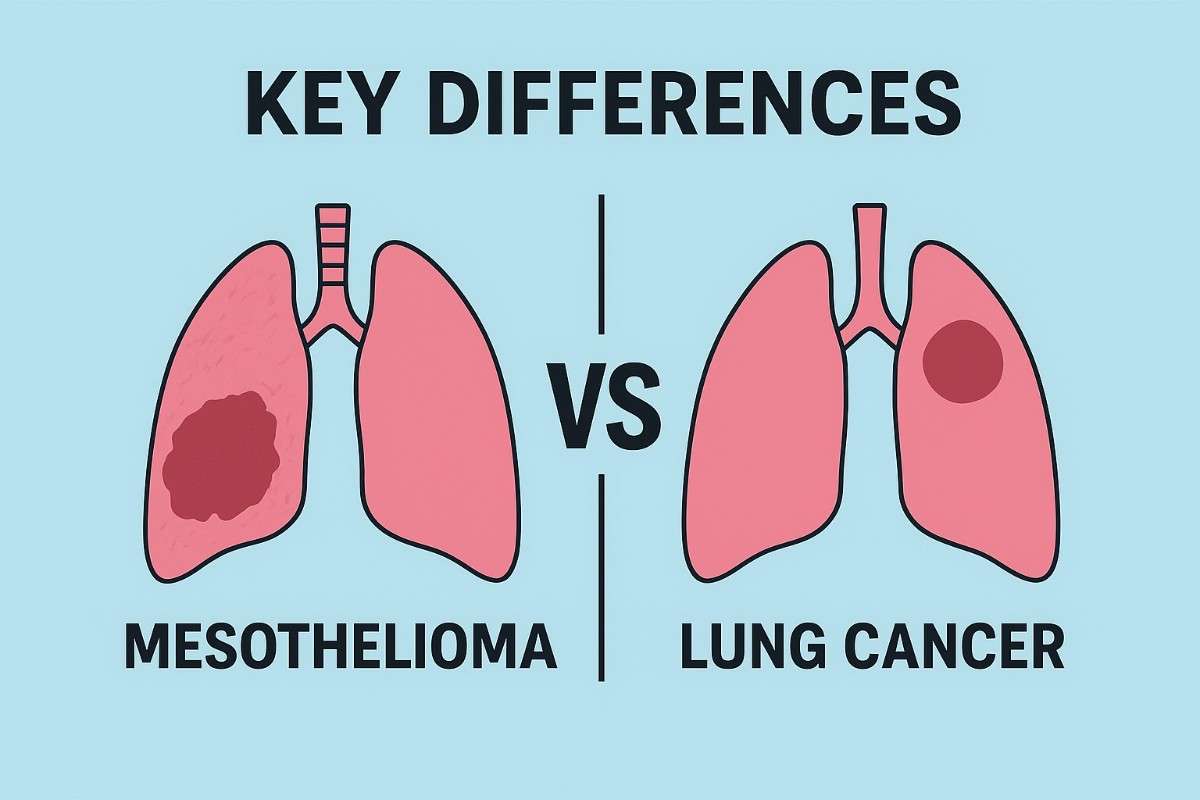
Mesothelioma and lung cancer are often mentioned together because both can affect the chest, cause breathing problems, and may be associated with asbestos exposure. Despite these similarities, they are different diseases that develop in different parts of the body and usually have different causes, treatment approaches, and long-term outlooks.
Knowing how mesothelioma differs from lung cancer can help patients and families better understand a diagnosis, discuss treatment options with healthcare providers, and determine whether asbestos exposure may create grounds for a legal claim.
What Is Mesothelioma?
Mesothelioma is a rare cancer that develops in the mesothelium, the thin membrane surrounding several internal organs. The disease most commonly affects the lining of the lungs, known as the pleura, but it can also develop in the abdominal lining (peritoneum), the lining around the heart (pericardium), or, in extremely uncommon cases, the lining surrounding the testicles.
Unlike many other cancers, mesothelioma is strongly associated with asbestos exposure. Tiny asbestos fibers can remain inside the body for decades after they are inhaled or swallowed. Over time, these fibers may trigger chronic inflammation and cellular damage that can eventually lead to cancer.
One of the challenges with mesothelioma is its unusually long latency period. Many people do not develop symptoms until 20 to 50 years after their initial exposure. Although relatively rare, with roughly 3,000 new cases diagnosed each year in the United States, mesothelioma is considered an aggressive cancer that often requires specialized treatment.
What Is Lung Cancer?
Lung cancer begins inside the lung tissue rather than in the protective lining surrounding the lungs. It is one of the most frequently diagnosed cancers worldwide and affects hundreds of thousands of Americans every year.
Doctors generally classify lung cancer into two primary categories:
- Non-Small Cell Lung Cancer (NSCLC), which represents approximately 85% of cases and includes adenocarcinoma, squamous cell carcinoma, and large cell carcinoma.
- Small Cell Lung Cancer (SCLC), a less common but faster-growing form that is strongly associated with long-term cigarette smoking.
Because lung cancer starts within the lungs themselves, it may spread to nearby tissues or distant organs earlier than mesothelioma in some patients.
Mesothelioma vs. Lung Cancer: Major Differences
Although both diseases can produce similar symptoms, several important differences help distinguish one from the other.
1. Primary Cause
The biggest distinction is the underlying cause.
Mesothelioma
Most mesothelioma cases are linked to occupational or environmental asbestos exposure. Workers in construction, shipbuilding, manufacturing, insulation, mining, and other industries historically faced the greatest risk. Family members could also be exposed through asbestos fibers carried home on contaminated clothing, shoes, or equipment.
Lung Cancer
Lung cancer has several possible causes.
The leading risk factor is tobacco smoking, which accounts for the majority of cases. Other contributing factors may include:
- Radon gas exposure
- Secondhand smoke
- Air pollution
- Certain occupational hazards
- Family history and inherited genetic factors
Although asbestos exposure can increase the risk of lung cancer, particularly in smokers, it is not the primary cause in most patients.
2. Where the Cancer Develops
Another key difference involves the location where each cancer begins.
Mesothelioma
Mesothelioma develops in the mesothelial lining surrounding organs rather than inside the organs themselves. Pleural mesothelioma affects the membrane covering the lungs instead of the lung tissue.
Lung Cancer
Lung cancer starts inside the lungs, usually in the cells lining the airways or the tiny air sacs responsible for oxygen exchange.
This difference influences how each disease grows, spreads, and is treated.
3. Symptoms
The two diseases often produce similar warning signs, making an accurate diagnosis especially important.
Common Mesothelioma Symptoms
People with pleural mesothelioma may experience:
- Persistent chest pain
- Ongoing cough
- Shortness of breath
- Fatigue
- Unexplained weight loss
- Pleural effusion (fluid around the lungs)
Peritoneal mesothelioma can also cause:
- Abdominal pain
- Swelling or bloating
- Digestive discomfort
- Loss of appetite
Common Lung Cancer Symptoms
Lung cancer symptoms may include:
- A persistent cough
- Coughing up blood
- Wheezing
- Hoarseness
- Chest discomfort
- Recurrent lung infections
- Unexplained weight loss
If lung cancer spreads beyond the lungs, additional symptoms such as bone pain, headaches, or neurological problems may develop.
4. Diagnosis
Doctors use imaging studies and tissue biopsies to diagnose both diseases, but the diagnostic process differs because each cancer develops in a different location.
Diagnosing Mesothelioma
A mesothelioma evaluation may include:
- Medical history, including asbestos exposure
- Chest X-rays
- CT scans
- PET scans
- MRI scans
- Tissue biopsy
- Blood tests that measure certain biomarkers
Because mesothelioma is uncommon and symptoms resemble several other illnesses, diagnosis can sometimes take longer.
Diagnosing Lung Cancer
Lung cancer testing often includes:
- Chest imaging
- Low-dose CT screening for eligible high-risk patients
- Bronchoscopy
- Sputum testing
- Needle or surgical biopsy
- Molecular or genetic testing to identify treatment targets
Finding specific genetic mutations can help doctors choose targeted therapies for some lung cancer patients.
5. Treatment Options
Treatment plans depend on the type of cancer, its stage, the patient’s overall health, and other medical factors.
Mesothelioma Treatment
Common treatment options include:
- Surgery when appropriate
- Chemotherapy
- Radiation therapy
- Immunotherapy
- Multimodal treatment combining several therapies
Because mesothelioma often spreads across the lining of the chest rather than forming a single tumor, surgery can be technically complex.
Lung Cancer Treatment
Lung cancer treatment may involve:
- Surgical removal of tumors
- Chemotherapy
- Radiation therapy
- Targeted therapy
- Immunotherapy
Patients diagnosed at an earlier stage often have more treatment options, particularly if surgery is possible.
6. Prognosis
Both diseases are serious, but survival outcomes vary depending on several factors.
Mesothelioma is frequently diagnosed after it has progressed, partly because symptoms can remain unnoticed for decades following asbestos exposure. This often makes treatment more challenging.
Lung cancer survival differs considerably depending on whether the cancer is detected early, the specific subtype involved, and how well it responds to treatment. Advances in targeted therapies and immunotherapy have improved outcomes for many patients with certain forms of lung cancer.
Similarities Between Mesothelioma and Lung Cancer
Despite their differences, the two conditions share several characteristics.
Common similarities include:
- Both may cause persistent coughing and breathing difficulties.
- Chest pain and fatigue are common symptoms.
- Asbestos exposure can increase the risk of both diseases.
- Chemotherapy, radiation therapy, and immunotherapy may be part of treatment.
- Early diagnosis generally offers more treatment opportunities.
Legal Considerations for Asbestos Exposure
For many mesothelioma patients, asbestos exposure occurred in workplaces where proper safety measures or warnings were absent.
Individuals diagnosed with asbestos-related diseases may have legal options that include:
- Filing an asbestos trust fund claim
- Pursuing compensation through a lawsuit
- Seeking damages for medical expenses, lost income, and other eligible losses
Because legal deadlines vary by state and individual circumstances, speaking with an attorney experienced in asbestos litigation can help determine what options may be available.
Can These Diseases Be Prevented?
While not every case can be prevented, certain steps may lower risk.
These include:
- Avoiding smoking and tobacco products
- Following workplace asbestos safety regulations
- Using appropriate protective equipment in high-risk occupations
- Hiring licensed professionals to inspect or remove asbestos-containing materials
- Discussing screening options with a healthcare provider if you have significant asbestos exposure or a history of heavy smoking
Final Thoughts
Mesothelioma and lung cancer may appear similar at first, but they differ in where they develop, what causes them, and how they are diagnosed and treated. Mesothelioma is closely associated with asbestos exposure and affects the protective lining surrounding organs, while lung cancer begins within the lung tissue and is most commonly linked to tobacco use.
If you have a history of asbestos exposure or are experiencing persistent respiratory symptoms, seeking medical evaluation as early as possible is important. For individuals diagnosed with an asbestos-related illness, understanding both medical and legal options can help support informed decisions during a difficult time.
Disclaimer: This article is provided for general informational purposes only and should not be considered medical or legal advice. Always consult a qualified healthcare professional regarding diagnosis or treatment, and speak with a licensed attorney for advice about your specific legal situation.