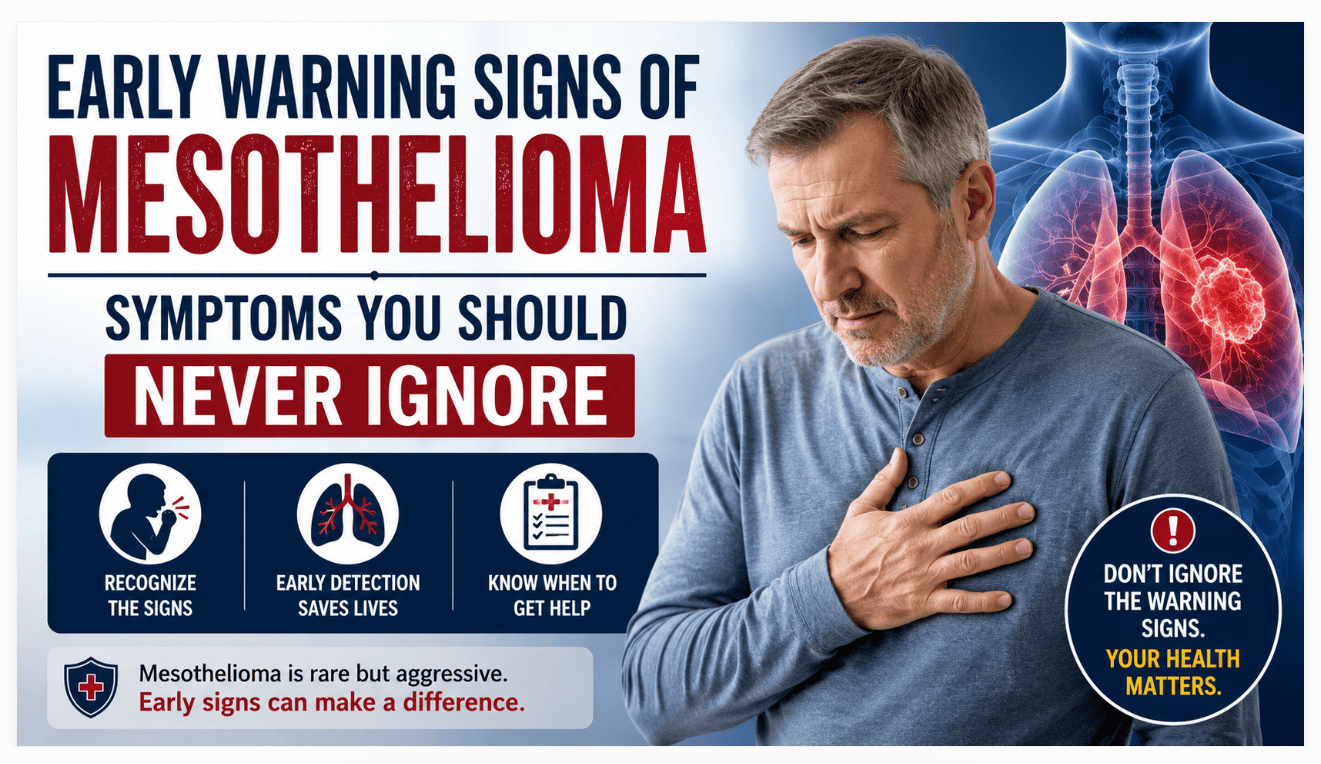
Mesothelioma is a rare cancer that develops in the thin lining surrounding the lungs, abdomen, heart, or other organs. Because it is strongly linked to asbestos exposure and often takes decades to appear, the first symptoms can be easy to overlook or attribute to more common problems.
Recognizing possible early warning signs matters. While these symptoms do not automatically mean mesothelioma, they warrant prompt medical attention—especially for anyone with a history of asbestos exposure. Early evaluation can lead to faster diagnosis and more treatment options.
This article outlines the most common symptoms, how they differ by the location of the disease, and practical steps to take if they appear.
Why Early Symptoms Are Often Missed
Mesothelioma has a long latency period, frequently 20 to 50 years after exposure. By the time symptoms begin, many people are older and may already have other health conditions. The early signs are usually vague and nonspecific. Shortness of breath might be blamed on aging or a respiratory infection. Abdominal discomfort might be treated as indigestion or a gastrointestinal issue.
Because the symptoms overlap with far more common illnesses, both patients and clinicians can initially pursue other explanations. A detailed exposure history is one of the most useful pieces of information a doctor can receive. Anyone who worked in construction, shipbuilding, manufacturing, insulation, or related fields—or who lived with someone who did—should mention that background when new or persistent symptoms arise.
Early Warning Signs of Pleural Mesothelioma
Pleural mesothelioma affects the lining around the lungs and is the most common form of the disease. Early symptoms often involve the chest and breathing.
Shortness of breath is one of the earliest and most frequent complaints. Fluid can accumulate between the lung and the chest wall (pleural effusion), making it harder for the lung to expand fully. People may notice they become winded with ordinary activities that previously caused no difficulty.
Persistent cough that does not resolve after a typical respiratory infection deserves attention. The cough may be dry or produce small amounts of sputum. It often lingers for weeks or months.
Chest pain or discomfort can feel dull, aching, or sometimes sharper. It may occur on one side and can worsen with deep breathing or coughing. Some people describe a feeling of pressure or heaviness in the chest.
Unexplained fatigue is common. The combination of reduced lung function, the body’s response to the tumor, and disrupted sleep can leave people feeling persistently tired even after rest.
Unintentional weight loss and reduced appetite frequently appear as the disease progresses, though they can begin relatively early in some patients.
Less common early signs include hoarseness, difficulty swallowing, or swelling of the face and arms if the tumor affects nearby structures.
Early Warning Signs of Peritoneal Mesothelioma
Peritoneal mesothelioma develops in the lining of the abdomen. Its symptoms often mimic digestive or gynecologic problems, which can delay recognition.
Abdominal swelling or bloating is a frequent early feature. Fluid buildup in the abdomen (ascites) can cause progressive enlargement of the belly and a feeling of fullness.
Abdominal pain or discomfort may be diffuse or localized. It can range from a dull ache to more pronounced pain and is sometimes mistaken for gastritis, irritable bowel issues, or menstrual-related discomfort.
Changes in bowel habits, including constipation or diarrhea, can occur as the disease affects the abdominal cavity.
Nausea, early satiety (feeling full after eating only a small amount), and unexplained weight loss are also common.
Women with peritoneal mesothelioma sometimes receive initial evaluations for ovarian or other gynecologic conditions because the symptoms overlap. Sharing any history of asbestos exposure helps clinicians consider a broader range of possibilities.
Other Possible Warning Signs
A few additional symptoms can appear with any form of mesothelioma or with the rarer pericardial type that involves the heart lining:
- Fever or night sweats
- Muscle weakness
- Anemia or other blood-count changes discovered on routine tests
- Heart palpitations or chest discomfort in pericardial disease
These signs are nonspecific and have many other causes. Their presence alongside respiratory or abdominal symptoms and an asbestos exposure history raises the level of concern.
When to See a Doctor
Any symptom that lasts more than a few weeks without clear explanation should be evaluated. This is especially true for people with known or possible asbestos exposure. Do not wait for symptoms to become severe.
When you see a physician, provide a clear account of:
- The specific symptoms and when they began
- Any history of work or secondary exposure to asbestos
- Prior respiratory or abdominal problems
- Current medications and other health conditions
The doctor may order imaging such as a chest X-ray or CT scan, blood work, and, if indicated, further tests including biopsy. Only tissue examination can confirm mesothelioma, but imaging and clinical history often guide the next steps.
Why Prompt Evaluation Matters
Mesothelioma is often diagnosed at an advanced stage precisely because early symptoms are subtle. When the disease is found earlier, a wider range of treatment approaches may be available, including surgery in selected cases, chemotherapy, immunotherapy, and clinical trials. Even when the cancer cannot be removed, earlier intervention can help control symptoms and improve quality of life.
Documenting the diagnosis and exposure history also preserves legal options for those who may be eligible for compensation through asbestos trust funds or civil claims. Statutes of limitations are measured from diagnosis or discovery in most states, so timely medical confirmation is important on both health and practical grounds.
Practical Steps If You Notice Warning Signs
Schedule an appointment with your primary care physician or a pulmonologist and describe the symptoms and any asbestos history in detail. Request that the exposure background be recorded in your medical chart.
Keep a simple symptom log noting dates, severity, and any patterns (for example, whether breathing difficulty worsens at night or after activity). This information helps clinicians.
Avoid self-diagnosis based on internet searches. Many of the symptoms listed here have far more common explanations. Only a proper medical evaluation can determine the cause.
If mesothelioma is diagnosed, seek care at a center experienced with the disease. High-volume programs are more familiar with the full range of treatment options and supportive services.
Frequently Asked Questions
Are early symptoms of mesothelioma always present?
Not always. Some people have few noticeable symptoms until the disease is more advanced. Others experience gradual changes that are easy to dismiss at first.
Can these symptoms be caused by something other than mesothelioma?
Yes. Shortness of breath, cough, chest pain, abdominal swelling, and fatigue have many possible causes. The combination of persistent symptoms plus asbestos exposure history is what raises specific concern.
How long do symptoms usually last before diagnosis?
It varies widely. Some people seek care within weeks; others have symptoms for months before the correct diagnosis is reached.
Does everyone with asbestos exposure develop these symptoms?
No. Most people with past asbestos exposure never develop mesothelioma. The disease remains relatively uncommon even among exposed groups.
What is the most common early symptom?
Shortness of breath and persistent cough are among the most frequently reported early complaints in pleural mesothelioma. Abdominal swelling and discomfort are more typical of peritoneal disease.
Should I get screened if I have a history of asbestos exposure but no symptoms?
Routine screening for mesothelioma in asymptomatic people is not currently standard. Discuss your exposure history with a physician; they can advise whether any monitoring is appropriate for your situation.
Can early detection improve outcomes?
Earlier diagnosis generally allows more treatment options and better symptom control. It does not guarantee cure, but it often improves the ability to manage the disease.
Internal and External Linking Suggestions
Internal links:
- Link “asbestos exposure” to a page explaining occupational and secondary risks.
- Link “mesothelioma diagnosis” to information on tests and staging.
- Link “treatment options” to an overview of surgery, chemotherapy, and immunotherapy.
- Link “compensation and legal options” to resources for patients seeking financial recovery.
External authoritative sources:
- American Cancer Society pages on mesothelioma signs and symptoms.
- National Cancer Institute information on mesothelioma.
- Centers for Disease Control and Prevention resources on asbestos-related diseases.
- American Thoracic Society or similar professional guidelines on evaluation of pleural disease.
- Peer-reviewed reviews on the clinical presentation of mesothelioma.
Closing Perspective
The early warning signs of mesothelioma are often subtle and easily attributed to everyday health problems. Persistent shortness of breath, ongoing cough, chest or abdominal pain, unexplained weight loss, and lasting fatigue deserve medical attention—particularly when there is any history of asbestos exposure.
Most people with these symptoms will not have mesothelioma. Still, timely evaluation provides peace of mind when the cause is benign and opens the door to earlier intervention when the cause is serious. Clear communication with physicians about both symptoms and exposure history remains one of the most effective steps patients and families can take.
This article is for educational purposes only. It does not replace professional medical advice. Anyone experiencing persistent symptoms should consult a qualified healthcare provider for proper evaluation and diagnosis.