Mesothelioma is often viewed as a disease of men who worked in heavy industry. That picture is incomplete. Women make up a meaningful share of cases, and the paths that lead to their diagnoses frequently differ from those of men. Secondary exposure, environmental contact, and diagnostic delays create distinct challenges. Understanding these differences helps women, families, and clinicians respond more effectively.
This article examines how mesothelioma presents in women, the main sources of risk, the obstacles that can delay care, and the practical steps that support better outcomes.
A Brief Overview of Mesothelioma
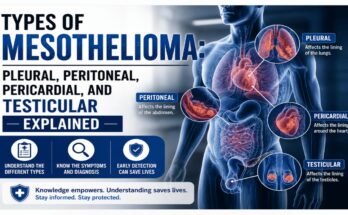
Mesothelioma is a cancer that develops in the mesothelium, the thin protective lining around the lungs, abdomen, heart, or testes. The overwhelming majority of cases are linked to asbestos exposure. When microscopic asbestos fibers are inhaled or swallowed, they can remain in the body for decades. Over time the fibers trigger chronic inflammation and cellular changes that may result in cancer. The latency period commonly stretches 20 to 50 years.
Symptoms vary by location of the disease. Pleural mesothelioma often causes shortness of breath, chest pain, or persistent cough. Peritoneal mesothelioma can produce abdominal swelling, digestive changes, or pelvic discomfort. Diagnosis usually requires imaging, biopsy, and specialized pathology. Treatment may include surgery, chemotherapy, immunotherapy, radiation, or combinations of these approaches.
How Mesothelioma Differs in Women
Men still account for the majority of diagnoses because of historically higher rates of occupational exposure. Women represent roughly one-fifth to one-quarter of cases in many data sets. Several patterns stand out.
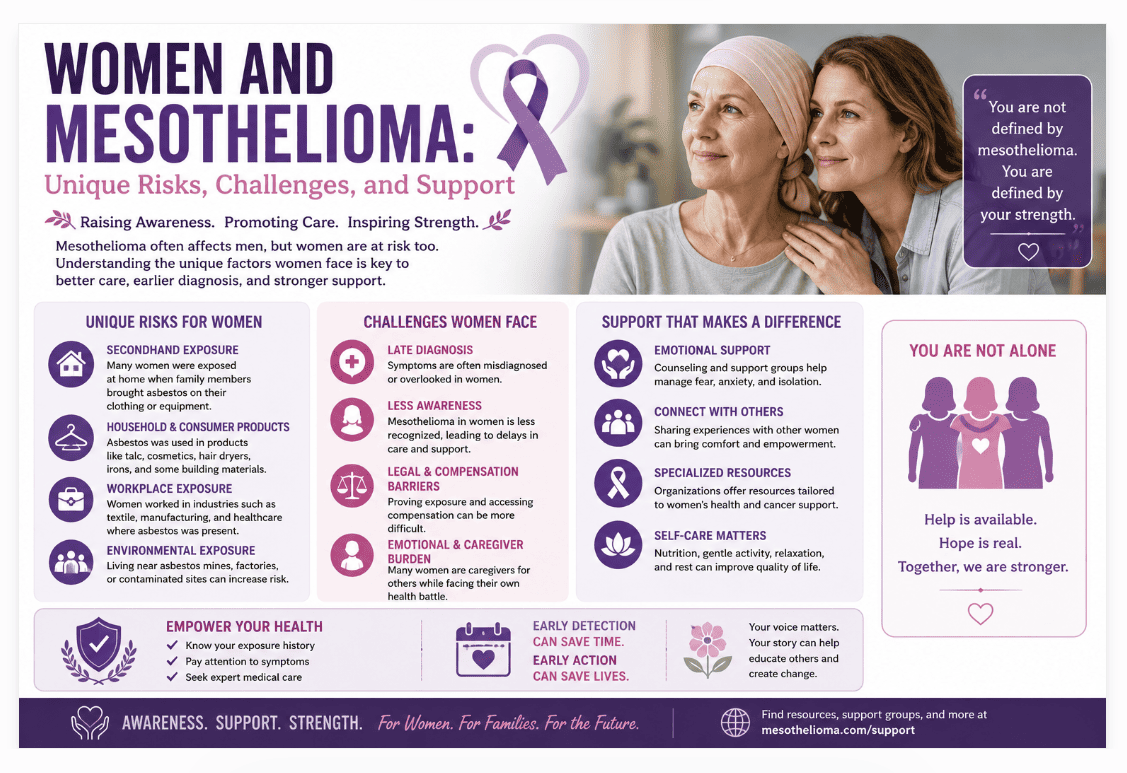
Women are more likely to develop peritoneal mesothelioma relative to men. The disease is also diagnosed at a somewhat younger average age in some series. Survival statistics sometimes appear more favorable for women, possibly reflecting differences in tumor biology, stage at diagnosis, or the proportion of peritoneal cases that respond well to aggressive surgical approaches.
These statistical differences do not mean the disease is milder. They do mean that the clinical picture and the route of exposure often look different.
Primary Sources of Risk for Women
Occupational exposure occurs in women who worked in industries that used asbestos, including manufacturing, textiles, and certain service roles. However, non-occupational pathways are especially important.
Secondary or take-home exposure is well documented. Workers in shipyards, construction, insulation, or related trades often carried fibers home on clothing, shoes, hair, or tools. Family members who handled laundry or shared living space inhaled those fibers. Many women diagnosed with mesothelioma report this form of contact as their only known exposure.
Environmental exposure arises from living near former asbestos mines, processing facilities, or natural deposits. Community contamination has produced clusters of cases that include significant numbers of women and children.
Consumer products have also contributed. Certain cosmetic talc products were historically contaminated with asbestos. Although regulations have tightened, past use remains relevant for some patients.
Biological factors may influence susceptibility. Research continues into hormonal and genetic differences that could affect how the body responds to the same level of fiber exposure. Inherited mutations such as those in the BAP1 gene increase risk when asbestos is also present, and these mutations appear in both men and women.
Diagnostic Challenges Specific to Women
Diagnostic delay is a recurring problem. Symptoms of peritoneal mesothelioma—abdominal bloating, pain, or digestive changes—can resemble more common gynecologic or gastrointestinal conditions. Clinicians may initially consider ovarian cancer, endometriosis, or irritable bowel issues. Respiratory symptoms in women are sometimes attributed to asthma, infection, or anxiety.
These misdirections can postpone biopsy and definitive diagnosis. Longer time to diagnosis often means the cancer is more advanced when treatment begins. Women who know they have a history of secondary or environmental asbestos exposure should share that information early and clearly with their doctors. A detailed exposure history improves the chance that mesothelioma enters the differential diagnosis.
Advocacy matters. Patients and families can request imaging, specialist referral, or tissue sampling when symptoms persist without clear explanation.
Treatment Considerations
Core treatments—surgery, chemotherapy, immunotherapy, and radiation—are the same for women and men. Surgical options for peritoneal disease, particularly cytoreductive surgery combined with heated intraperitoneal chemotherapy, have produced meaningful long-term survival in carefully selected patients. Women appear in many of the published series that report these results.
Access to high-volume centers experienced with mesothelioma remains important. Clinical trial eligibility, supportive care for side effects, and attention to fertility or hormonal concerns may require additional coordination for younger women.
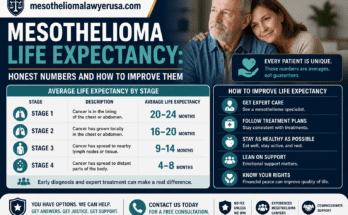
Prognosis depends more on stage, cell type, overall health, and response to treatment than on sex alone. Some data sets show longer average survival among women, but individual outcomes vary widely.
Emotional and Practical Challenges
Women often continue to carry significant caregiving responsibilities for children, partners, or aging parents even while managing their own illness. The combination of physical symptoms, treatment schedules, and family roles can intensify emotional strain. Feelings of guilt about burdening others or worry about the impact on dependents are common.
Support groups that include women with similar exposure histories can reduce isolation. Professional counseling helps many patients process fear, grief, and changes in identity or body image. Caregivers also need their own resources so that the emotional load does not fall entirely on one person.
Prevention and Risk Reduction for Women
Prevention centers on limiting further asbestos exposure.
If a household member works in a high-risk occupation, establish clear routines: change out of work clothes before entering living areas, keep contaminated clothing separate, and avoid shaking out dusty garments indoors. Professional cleaning or on-site laundry facilities further reduce fiber transfer.
Before renovating older homes, have suspect materials tested by qualified professionals. Do not disturb insulation, flooring, or textured surfaces that may contain asbestos. Hire licensed abatement contractors when removal is necessary.
Be cautious with older cosmetic or household products that may have contained talc. Current regulations have reduced this risk, yet awareness of past use remains relevant for personal medical history.
Women with known exposure should discuss that history with their physicians and report new or persistent respiratory or abdominal symptoms promptly.
Legal Recognition of Women’s Claims
Secondary exposure is recognized in the legal system. Courts and asbestos trust funds have compensated many women whose only contact came through a family member’s work. Documentation of the relative’s occupation, job sites, and the household’s laundry or cleaning practices helps establish the link.
Women can pursue the same pathways available to other patients: asbestos bankruptcy trust claims, personal-injury or wrongful-death lawsuits against solvent companies, and, when applicable, veterans’ benefits if a spouse’s service involved asbestos. Timelines for filing are limited, so early consultation with experienced counsel protects options.
Frequently Asked Questions
Why do women get mesothelioma if they never worked with asbestos?
Many cases result from secondary exposure. Fibers brought home on a worker’s clothing or tools can be inhaled by family members over years.
Is peritoneal mesothelioma more common in women?
Yes. A higher proportion of mesothelioma cases in women involve the abdominal lining compared with men.
Why is diagnosis sometimes delayed in women?
Symptoms can overlap with more common gynecologic or digestive conditions. Without a clear exposure history, mesothelioma may not be considered early.
Do women have better survival rates?
Some studies report longer average survival among women. Outcomes still depend heavily on stage, cell type, and treatment response.
Can women file asbestos claims based on secondary exposure?
Yes. Legal systems recognize take-home exposure. Proper documentation of the source of fibers strengthens the claim.
What should women with a family history of asbestos work do?
Share the exposure history with their doctors, remain alert to persistent symptoms, and avoid further contact with asbestos whenever possible.
Does mesothelioma affect fertility or pregnancy?
In younger women the disease or its treatment can raise concerns about reproductive health. Specialized gynecologic oncology input is often needed.
Internal and External Linking Suggestions
Internal links:
- Link “secondary asbestos exposure” to a detailed explanation of take-home risks.
- Link “peritoneal mesothelioma treatment” to surgical and HIPEC information.
- Link “compensation options” to guidance on trust funds and lawsuits.
- Link “emotional support resources” to mental health and caregiver pages.
External authoritative sources:
- American Cancer Society information on asbestos and mesothelioma.
- Centers for Disease Control and Prevention pages on asbestos-related diseases.
- National Cancer Institute resources on mesothelioma.
- Peer-reviewed studies on sex differences in mesothelioma incidence and survival.
- Environmental Protection Agency guidance on asbestos in homes.
Closing Perspective
Mesothelioma in women is real, under-recognized, and often rooted in secondary or environmental exposure rather than direct occupational contact. Diagnostic delays remain a serious problem, yet growing awareness is improving the chances that the disease is considered earlier. Treatment options continue to advance, and legal pathways exist for those whose exposure came through family members or household contact.
Women who know they have a history of asbestos exposure—direct or indirect—can protect their health by sharing that history with clinicians, monitoring symptoms, and reducing further risk. Support, accurate information, and timely care make a practical difference.
This article is for educational purposes only. It does not replace personalized medical or legal advice. Individuals should consult qualified healthcare professionals and, when appropriate, attorneys experienced in asbestos-related claims.