Mesothelioma is a rare cancer that develops in the mesothelium, the thin layer of tissue that lines the lungs, abdomen, heart, and other internal organs. Understanding its causes is essential for prevention, early recognition of risk, and supporting those already affected.
The disease is strongly linked to asbestos. In the large majority of cases, exposure to asbestos fibers is the clear driver. Other factors play much smaller roles and usually require asbestos contact as well. This article explains the established causes, the main routes of exposure, and the practical implications for individuals and families.
What Mesothelioma Is ?
Mesothelioma arises when cells in the mesothelium become malignant. The most common form is pleural mesothelioma, which affects the lining around the lungs. Peritoneal mesothelioma involves the abdominal lining. Rarer forms affect the heart (pericardial) or the covering of the testes.
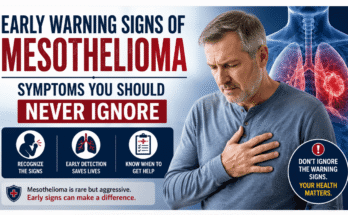
The cancer is aggressive. Symptoms such as shortness of breath, chest or abdominal pain, fatigue, and unexplained weight loss often appear only after the disease has progressed. Because these symptoms overlap with more common conditions, diagnosis can be delayed. Treatment options include surgery, chemotherapy, immunotherapy, and radiation, but outcomes depend heavily on stage and overall health at diagnosis.
Primary Cause: Asbestos Exposure
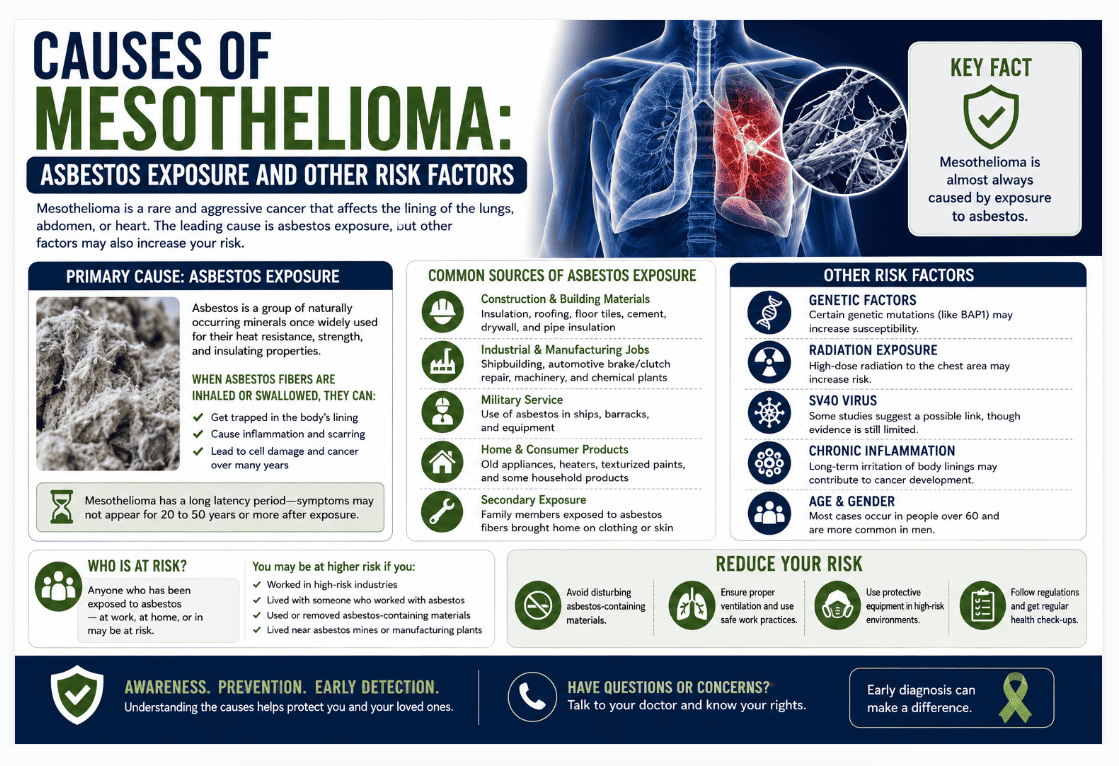
Asbestos is the dominant cause of mesothelioma. Decades of medical and epidemiological evidence show that the great majority of cases—typically estimated at 80 percent or higher—are linked to asbestos fibers.
Asbestos is a group of naturally occurring fibrous minerals valued for heat resistance, strength, and insulating properties. It was widely used in construction materials, insulation, shipbuilding, automotive parts, and many industrial products throughout much of the twentieth century. When materials containing asbestos are cut, sanded, demolished, or otherwise disturbed, microscopic fibers can become airborne. Once inhaled or swallowed, the fibers can lodge in the mesothelium.
The body has difficulty clearing these fibers. Over many years they cause persistent inflammation and scarring. This chronic irritation can lead to genetic changes in the cells of the mesothelium, eventually resulting in cancer. The latency period between exposure and diagnosis is typically 20 to 50 years, which explains why cases continue to appear long after many uses of asbestos were restricted.
There is no established safe level of asbestos exposure. Risk rises with the intensity and duration of contact, but even lower-level or intermittent exposure has been associated with disease in some individuals.
Main Routes of Asbestos Exposure
Occupational exposure accounts for the largest share of cases. Workers in certain industries faced repeated or high-level contact. High-risk occupations have historically included construction and demolition, shipbuilding and ship repair, insulation work, manufacturing of asbestos-containing products, mining and milling of asbestos, and various maintenance and mechanical trades. Military service, particularly in the Navy and shipyards, also produced significant exposure for many veterans.
Secondary or take-home exposure occurs when workers carry fibers home on clothing, hair, shoes, or tools. Family members who handled contaminated laundry or shared living space could inhale the fibers. This pathway has been well documented and explains a substantial portion of cases among women and people who never worked directly with asbestos.
Environmental exposure arises from living near asbestos mines, processing facilities, or natural deposits of asbestos-containing rock. In some regions, erionite—a mineral fiber with similar properties—has also been linked to elevated mesothelioma rates. Urban redevelopment and renovation of older buildings can release fibers into the air if proper controls are not used.
Other Factors Sometimes Discussed
A few additional factors have been studied, though none approaches the importance of asbestos.
High-dose radiation therapy given for earlier cancers has been associated with a small increase in mesothelioma risk years later. This remains an uncommon pathway.
Certain inherited genetic changes, most notably mutations in the BAP1 gene, can raise susceptibility. People who carry these mutations appear more likely to develop mesothelioma if they are also exposed to asbestos. Purely genetic cases without any asbestos exposure are rare.
Some older research explored a possible link between the simian virus 40 (SV40), which contaminated certain polio vaccines decades ago, and mesothelioma. Major health authorities have not established a clear causal relationship, and the association is generally considered unproven.
Smoking does not cause mesothelioma. It does significantly increase the risk of lung cancer in people who have also been exposed to asbestos, and it can complicate diagnosis and overall health.
Who Faces Elevated Risk
Anyone with a history of meaningful asbestos exposure carries higher risk. This includes:
- Workers in the industries listed above
- Veterans who served in settings where asbestos was common
- Family members of heavily exposed workers
- People who lived near industrial or natural asbestos sources
- Individuals involved in renovation or demolition of older structures without proper protections
Most diagnoses occur in people over age 65, reflecting the long latency period. Men have historically accounted for the majority of cases because of occupational patterns, yet women form a significant share, largely through secondary exposure.
Connecting Causes to Prevention and Support
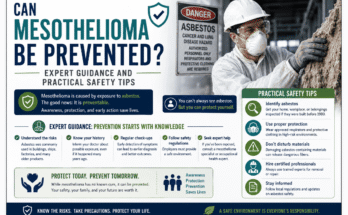
Because asbestos is the primary driver, prevention centers on avoiding exposure. In workplaces this means proper identification of asbestos-containing materials, use of certified abatement practices, appropriate protective equipment, and hygiene measures that prevent fibers from being carried home. In homes and public buildings it means professional inspection and handling of suspect materials rather than do-it-yourself disturbance.
For people already diagnosed, documenting the exposure history is important both for medical care and for potential legal claims. Occupational records, military service history, and information about family members’ work can help establish the link to asbestos. Many patients pursue compensation through asbestos bankruptcy trusts or civil claims against companies that manufactured or used asbestos products.
Frequently Asked Questions
Is asbestos the only cause of mesothelioma?
It is by far the predominant cause. Other factors such as radiation or genetic predisposition play much smaller roles and usually act in combination with asbestos.
Can brief or low-level exposure cause mesothelioma?
Risk increases with greater intensity and duration of exposure, but no safe threshold has been established. Some cases have been linked to relatively limited contact.
What is secondary or take-home exposure?
It occurs when asbestos fibers are brought into the home on a worker’s clothing, hair, or belongings, exposing family members.
Does smoking cause mesothelioma?
No. Smoking does not cause mesothelioma, but it greatly raises the risk of lung cancer in people who have also been exposed to asbestos.
Are there genetic causes?
Inherited mutations such as those in the BAP1 gene can increase susceptibility, particularly when asbestos exposure is also present. Purely genetic cases are uncommon.
How long after exposure does mesothelioma develop?
The latency period is typically 20 to 50 years, which is why many people are diagnosed long after the original exposure occurred.
Can mesothelioma be prevented?
The most effective prevention is avoiding asbestos exposure through proper workplace controls, professional handling of older materials, and awareness of secondary exposure risks.
Internal and External Linking Suggestions
Internal links:
- Link “asbestos exposure” to a detailed page on common sources and high-risk occupations.
- Link “secondary exposure” to information specifically for family members.
- Link “prevention strategies” to practical safety guidance.
- Link “legal and compensation options” to resources on trust funds and claims.
External authoritative sources:
- American Cancer Society information on asbestos and mesothelioma.
- Centers for Disease Control and Prevention pages on asbestos-related diseases.
- World Health Organization or International Agency for Research on Cancer statements on asbestos.
- Occupational Safety and Health Administration standards and guidance.
- National Cancer Institute resources on mesothelioma risk factors.
Closing Perspective
Mesothelioma is overwhelmingly a disease of asbestos exposure. Occupational, secondary, and environmental contact with the fibers account for the large majority of cases. Other factors such as radiation and genetic predisposition contribute in only a small fraction of patients and almost always require asbestos as a co-factor.
Clear understanding of these causes supports better prevention, more informed medical histories, and stronger documentation when patients seek compensation. Reducing future exposure remains the most powerful tool available for lowering the burden of this disease.
This article is for educational purposes only. It does not replace professional medical or legal advice. Individuals with concerns about past exposure or symptoms should consult qualified healthcare providers and, when appropriate, legal professionals experienced in asbestos-related matters.