One of the most important parts of any mesothelioma lawsuit is identifying the companies responsible for the asbestos exposure that led to the illness. Fortunately, decades of legal cases have created a detailed record of the manufacturers, distributors, and suppliers that produced or sold asbestos-containing products throughout the twentieth century.
Many of these companies have already been held legally responsible for exposing workers and consumers to asbestos. Understanding who they are can help patients and families better understand their legal options and pursue the compensation they may be entitled to receive.
Why Are Asbestos Companies Held Liable?
The legal foundation behind most mesothelioma lawsuits is straightforward. Many asbestos companies knew—or should have known—that asbestos posed serious health risks. Despite this knowledge, they continued manufacturing, selling, and distributing asbestos-containing products without giving workers or consumers adequate warnings.
Over the years, lawsuits uncovered internal company documents showing that some manufacturers were aware of the dangers as early as the 1930s and 1940s. Instead of acting to protect public health, many allegedly downplayed the risks, suppressed research, resisted stronger safety regulations, and continued selling their products.
This failure to warn people about known hazards is one of the primary reasons these companies have been held legally accountable in mesothelioma cases.
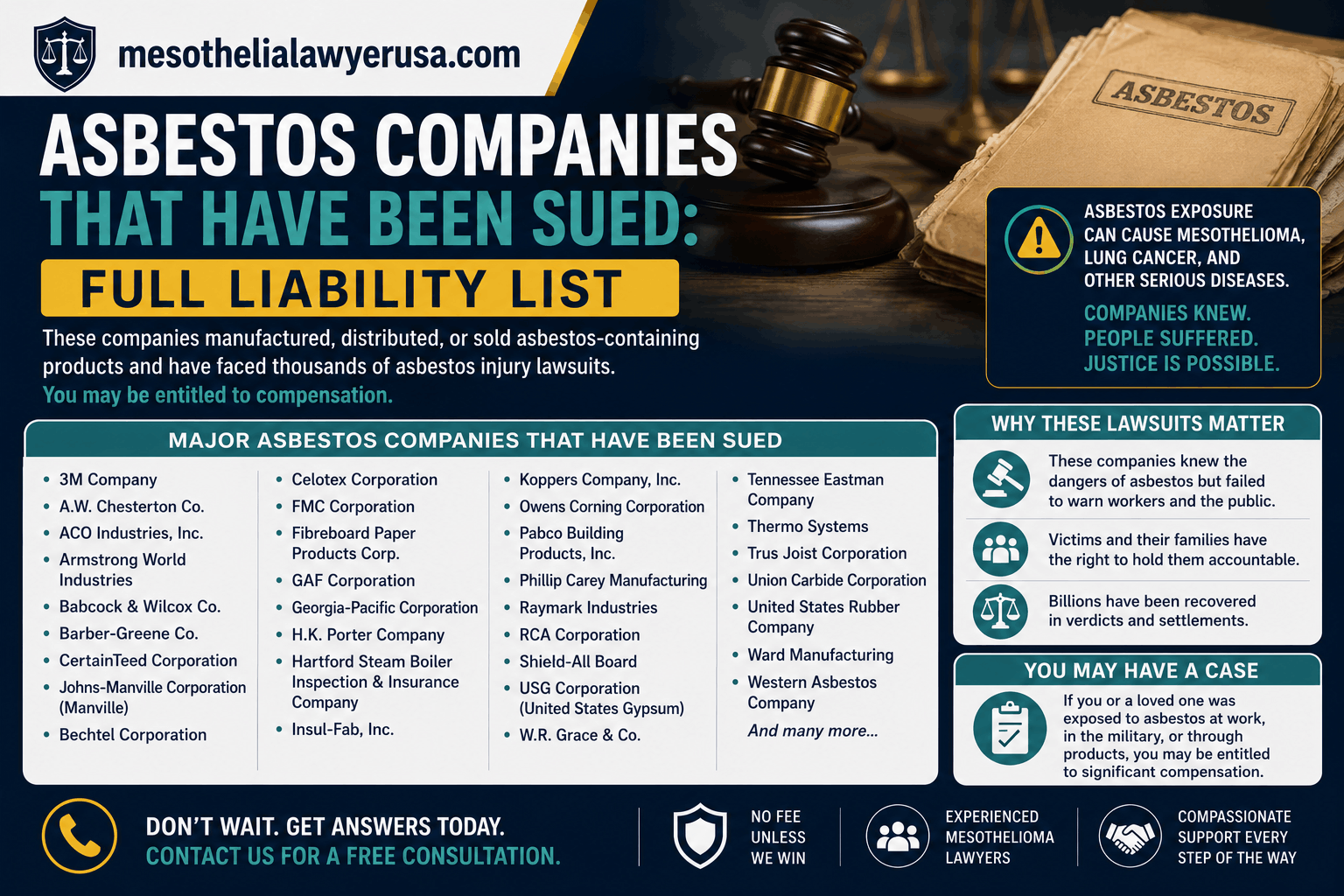
Major Asbestos Manufacturers
Johns-Manville Corporation
Johns-Manville was one of the largest asbestos manufacturers in American history. Its products included insulation, roofing materials, flooring, and various construction products that contained asbestos.
After facing thousands of asbestos-related lawsuits, the company filed for bankruptcy in 1982. During the bankruptcy process, it created the Manville Personal Injury Settlement Trust, which remains one of the largest and best-funded asbestos trust funds available today.
W.R. Grace & Company
W.R. Grace produced several asbestos-containing construction materials, including insulation and fireproofing products. Its Zonolite attic insulation and Monokote fireproofing products were widely used across the United States and have been linked to numerous mesothelioma cases.
The company filed for bankruptcy in 2001 and later established an asbestos trust fund as part of its reorganization.
Owens Corning
Owens Corning manufactured asbestos insulation products used in both residential and commercial buildings during the mid-twentieth century.
As asbestos lawsuits increased, the company filed for bankruptcy in 2000 and created a trust fund to compensate eligible asbestos victims.
Armstrong World Industries
Armstrong World Industries produced asbestos-containing floor tiles, ceiling tiles, and other building materials that were commonly used in homes, offices, and commercial buildings.
The company also filed for bankruptcy in 2000 and established an asbestos trust to resolve future claims.
Celotex Corporation
Celotex manufactured roofing materials, insulation boards, and other construction products containing asbestos. These materials were widely used throughout the construction industry, leading to significant exposure among construction workers.
The company has been named in numerous mesothelioma lawsuits over the years.
Babcock & Wilcox
Babcock & Wilcox produced industrial boilers and equipment insulated with asbestos. Its products were commonly installed in Navy ships, power plants, and industrial facilities.
Because of this widespread use, Navy veterans, shipyard workers, and power plant employees are among those most frequently associated with exposure to the company’s products.
Combustion Engineering
Combustion Engineering manufactured industrial equipment that contained asbestos and was widely used in military and industrial settings.
The company faced substantial asbestos-related liability and eventually established a trust fund through bankruptcy proceedings.
Pittsburgh Corning
Pittsburgh Corning produced Unibestos pipe insulation and other asbestos-containing materials used in shipbuilding and industrial facilities.
Following extensive litigation, the company filed for bankruptcy and established an asbestos trust fund that has compensated many mesothelioma victims.
Garlock Sealing Technologies
Garlock manufactured asbestos-containing gaskets and sealing products used in factories, shipyards, refineries, and chemical plants.
Workers in these industries often handled Garlock products during routine maintenance and repair work, making them particularly vulnerable to asbestos exposure.
Georgia-Pacific
Georgia-Pacific manufactured asbestos-containing joint compounds and other construction materials used in residential and commercial building projects.
The company has faced significant litigation involving construction workers who were exposed while installing or finishing drywall products.
Asbestos Distributors and Suppliers
Manufacturers were not the only companies held responsible. Many distributors and suppliers that provided asbestos products to industries such as construction, shipbuilding, manufacturing, and heavy industry have also faced legal claims.
Identifying these companies often requires detailed knowledge of which products were supplied to specific industries during certain time periods. Experienced mesothelioma law firms have built extensive databases from decades of litigation, allowing them to trace asbestos exposure back to the appropriate companies.
The Role of Insurance Companies
Many asbestos defendants are backed by insurance companies that have reserved substantial funds to cover asbestos-related claims.
Understanding a company’s insurance coverage is an important part of the legal process because it helps determine whether settlements or verdicts can actually be collected. Experienced mesothelioma attorneys are familiar with these insurance issues and use that knowledge when negotiating compensation.
What This Means for Your Case
One advantage of modern mesothelioma litigation is that much of the investigative work has already been done through decades of previous lawsuits.
Experienced attorneys have access to extensive records showing:
- Which companies manufactured asbestos products
- Which industries used those products
- Where those products were commonly installed
- Which occupations faced the highest exposure risks
This information allows lawyers to connect a person’s work history with the companies responsible for their asbestos exposure, creating a stronger and more focused compensation claim.
Every case is unique, however. The companies involved will depend on your specific job history, the products you worked with, and the industries where you were employed. Your legal team will carefully review your exposure history to identify every potentially responsible company and maximize your opportunity for compensation.
Final Thoughts: Holding Companies Accountable
The history of asbestos litigation in the United States reflects an important legal principle: companies that knowingly exposed workers and families to dangerous products should be held accountable for the harm they caused.
Over the years, lawsuits, court decisions, and asbestos trust funds have created a well-established path for mesothelioma patients to seek financial compensation for medical expenses, lost income, and other damages.
If you’ve been diagnosed with mesothelioma and recognize any of the companies or products mentioned in this guide from your work history, that information could be important to your legal claim. Share as much detail as possible about your employment and exposure history with an experienced mesothelioma attorney so they can identify every company that may have contributed to your diagnosis.
Legal Disclaimer
This article is provided for informational purposes only and should not be considered legal advice. The company information included here is based on publicly available litigation records. Reading this article does not create an attorney-client relationship. If you need legal guidance about your specific circumstances, consult a qualified mesothelioma attorney.