Mesothelioma is a rare, aggressive cancer that develops in the mesothelium, the thin protective lining covering the lungs, abdomen, heart, and other organs. The strongest and most established cause is asbestos exposure. Roughly 3,000 new cases are diagnosed each year in the United States. While the large majority of cases involve a history of asbestos contact, researchers continue to examine whether other factors can contribute in a smaller number of situations. Understanding the primary cause, possible additional influences, symptoms, and practical next steps helps people evaluate their own risk and seek appropriate medical care.
What Mesothelioma Is
Mesothelioma forms in the mesothelium. The most common type is pleural mesothelioma, which affects the lining around the lungs. Peritoneal mesothelioma occurs in the abdomen, and pericardial mesothelioma involves the lining around the heart; both are less frequent. The disease typically has a long latency period of 20 to 50 years between first exposure and the appearance of symptoms. Because symptoms often develop late, early diagnosis can be difficult.
Asbestos: The Primary Cause
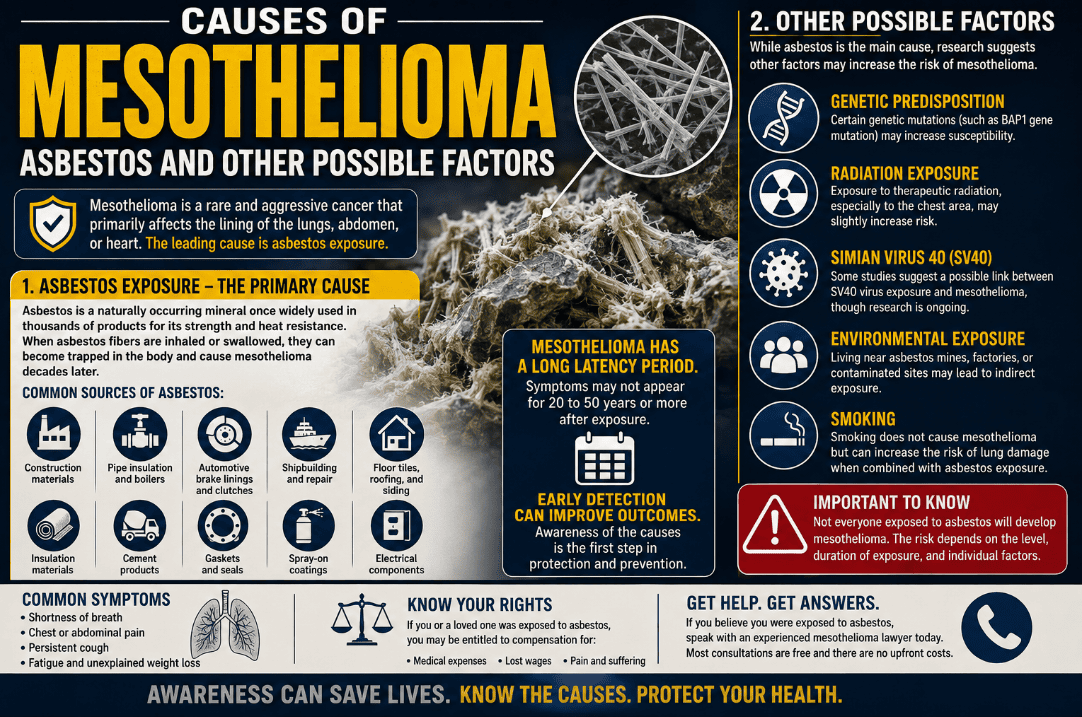
Asbestos is a group of naturally occurring minerals once widely used for heat resistance and insulation. When asbestos-containing materials are disturbed, microscopic fibers can be inhaled or swallowed. These fibers may lodge in the mesothelium, causing chronic inflammation and, over time, cellular changes that lead to cancer.
Most documented cases of mesothelioma are linked to asbestos. Exposure has historically occurred in occupations such as construction, shipbuilding, manufacturing, and related trades. Secondary (take-home) exposure has also affected family members who came into contact with fibers carried on work clothing or tools. Environmental exposure near certain industrial sites or natural deposits has been recorded as well. Even though new uses of asbestos have been restricted, legacy materials in older buildings and equipment continue to present risk during renovation or demolition.
Other Factors Under Investigation
Although asbestos accounts for the overwhelming majority of cases, a small number of people develop mesothelioma without a clear history of asbestos exposure. Research has examined several other possible influences:
Prior radiation therapy
High-dose radiation to the chest or abdomen, sometimes used to treat other cancers, has been associated with mesothelioma in rare instances. The connection appears strongest when radiation was delivered years earlier.
Certain natural minerals
Minerals such as erionite, a type of zeolite found in specific geologic regions, have physical properties similar to asbestos and have been linked to elevated mesothelioma rates in those areas.
Genetic predisposition
Inherited mutations, including changes in the BAP1 gene, may increase susceptibility in some families. These genetic factors are uncommon and usually act in combination with environmental exposures rather than independently.
Other investigated agents
Limited studies have explored possible roles for certain viruses or newer industrial materials that share fiber-like characteristics with asbestos. The evidence for these associations remains incomplete and is not considered definitive.
In the large majority of diagnoses, asbestos exposure is still identified as the main contributing factor. Cases without any asbestos history are uncommon.
Who May Face Elevated Risk
People with the highest risk are those who worked directly with asbestos-containing products or lived with someone who did. Additional groups that warrant attention include:
- Individuals who received significant radiation therapy to the chest or abdomen in the past
- Residents of regions with known natural deposits of erionite or similar minerals
- People with a strong family history of mesothelioma or certain genetic conditions
Even in these situations, asbestos exposure remains the dominant known cause when it is present.
Common Symptoms
Symptoms depend on the location of the tumor and often resemble more common conditions:
Pleural mesothelioma
Persistent cough, shortness of breath, chest pain or tightness, fatigue, unexplained weight loss, and fluid around the lungs.
Peritoneal mesothelioma
Abdominal pain or swelling, nausea, changes in bowel habits, and loss of appetite.
Pericardial mesothelioma
Chest discomfort, heart palpitations, or breathing difficulty (rare).
Anyone with a history of possible asbestos contact or other risk factors who develops these symptoms should discuss them with a physician and mention the exposure history.
Diagnosis and Treatment Overview
Diagnosis usually begins with a detailed medical and exposure history, followed by imaging such as X-rays, CT scans, or PET scans. A biopsy is required to confirm the presence of mesothelioma cells. Staging then determines how far the disease has spread and helps guide treatment decisions.
Treatment options may include surgery, chemotherapy, radiation, immunotherapy, or combinations of these approaches. Supportive care focuses on managing symptoms and maintaining quality of life. Outcomes vary based on the type of mesothelioma, stage at diagnosis, and overall health of the patient.
Reducing Risk and Seeking Care
The most effective way to lower risk is to avoid asbestos exposure. Workers in high-risk trades should follow established safety protocols, use appropriate protective equipment, and request material testing when older insulation or building components are present. People with prior radiation therapy or other potential risk factors benefit from discussing monitoring options with their doctors.
When mesothelioma is diagnosed, documenting any occupational, environmental, or medical history of possible contributing factors is important. This information assists both medical treatment planning and any evaluation of legal options. Claims related to asbestos exposure may involve manufacturers, suppliers, or asbestos bankruptcy trust funds. Time limits for filing claims vary by state and generally begin from the date of diagnosis or from the date the connection to asbestos was reasonably discovered. An attorney experienced in these cases can review the specific circumstances.
Understanding the Full Picture
Asbestos remains the primary and best-documented cause of mesothelioma. Other factors such as prior high-dose radiation, certain natural minerals, and rare genetic predispositions may contribute in a limited number of cases, but they account for a small fraction of diagnoses. Awareness of the main risk, attention to early symptoms, and timely medical evaluation give individuals the best opportunity for earlier detection and informed decision-making.
This information is provided for educational purposes only and is not a substitute for professional medical or legal advice. Individual circumstances differ, and qualified professionals should be consulted for personal guidance.