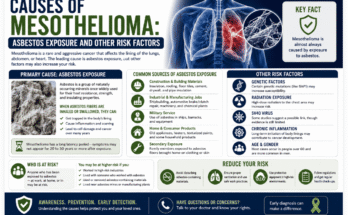
Mesothelioma is a rare but aggressive cancer that develops in the lining of the lungs, abdomen, or other organs. The primary cause is asbestos exposure, which often occurs in workplaces where older building materials or equipment are present. Many people who develop mesothelioma were exposed decades earlier while performing routine job tasks. Strong workplace safety practices can significantly lower the chance of inhaling asbestos fibers and help protect long-term health.
This article outlines practical safety tips every employee and employer can follow to reduce asbestos-related risks and support overall workplace safety.
Why Workplace Safety Matters for Mesothelioma Prevention
Asbestos was widely used in insulation, flooring, roofing, cement products, and machinery until the late 20th century. Although new uses are restricted, legacy materials remain in many older buildings, factories, ships, and industrial sites. When these materials are cut, drilled, sanded, or disturbed, microscopic fibers can become airborne. Inhaling them raises the risk of mesothelioma, lung cancer, and asbestosis—diseases that may not appear for 20 to 50 years.
Consistent safety habits protect workers from both immediate injuries and these delayed health effects.
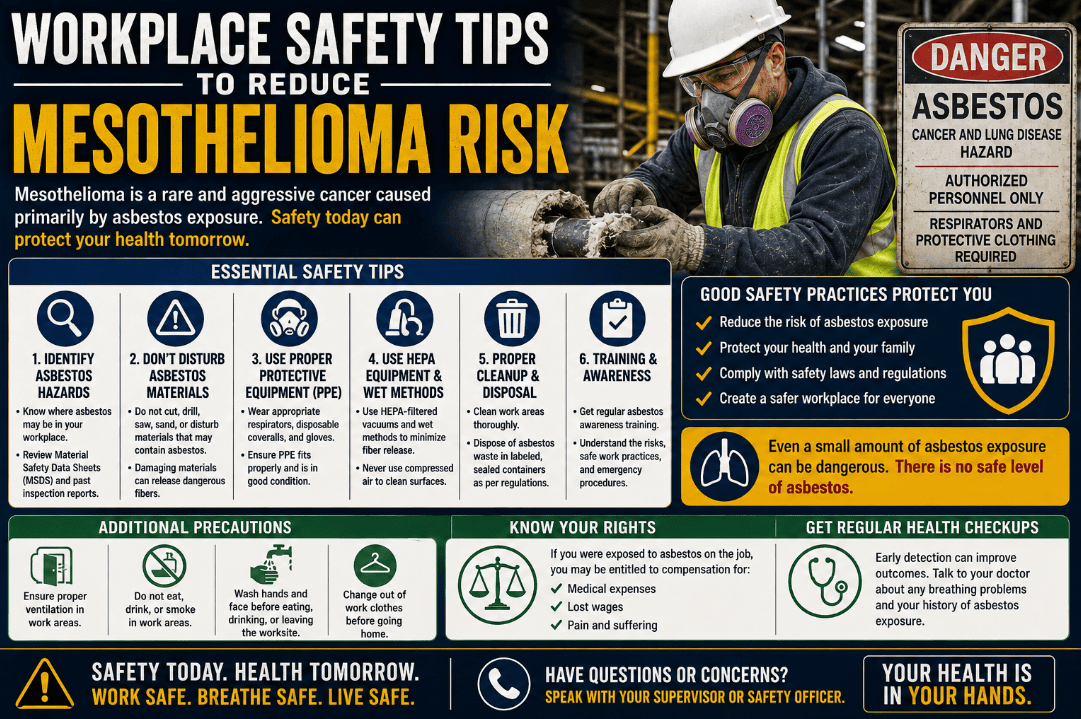
1. Identify Potential Asbestos-Containing Materials
Before starting work in older buildings or on older equipment, assume materials such as pipe insulation, ceiling tiles, floor tiles, roofing, and certain gaskets may contain asbestos until testing proves otherwise. Employers should arrange for proper inspection and sampling by qualified professionals. Knowing where asbestos is present is the first step in controlling exposure.
2. Use Proper Personal Protective Equipment
When work near suspect materials cannot be avoided, wear the correct protective gear. This includes a properly fitted respirator approved for asbestos, disposable coveralls, gloves, and eye protection. Inspect equipment before each use and replace anything damaged. Never reuse disposable protective clothing that may be contaminated.
3. Follow Asbestos-Specific Training and Procedures
Complete any required asbestos-awareness or handling training. Learn the difference between activities that may disturb materials and those that require full abatement by certified contractors. Follow written work practices, including wet methods to suppress dust, proper containment, and correct disposal of waste. Ask supervisors for clarification whenever procedures are unclear.
4. Minimize Dust and Disturbance
Avoid dry sweeping, compressed air, or aggressive sanding of materials that may contain asbestos. Use wet methods, local exhaust ventilation, and gentle handling techniques whenever possible. Keep work areas clean and organized so damaged materials are noticed and reported quickly.
5. Report Damaged or Deteriorating Materials Immediately
Cracked insulation, crumbling ceiling tiles, damaged flooring, or frayed pipe wrapping should be reported at once. Early reporting allows the materials to be evaluated, sealed, or removed by trained personnel before fibers are released. Documenting the condition also creates a record if health questions arise later.
6. Practice Good Hygiene at the End of the Shift
When work involves potential asbestos contact, change out of work clothes and shower before leaving the site if facilities are available. Do not take contaminated clothing home. This simple step reduces the chance of secondary exposure to family members.
7. Support Proper Ventilation and Engineering Controls
Adequate airflow and local exhaust systems help keep airborne fibers from accumulating. Report poorly functioning ventilation and never disable safety controls. Engineering solutions that capture dust at the source are more effective than relying only on respirators.
8. Participate in Medical Monitoring When Offered
Workers with known or possible past asbestos exposure benefit from regular health check-ups that include discussion of respiratory symptoms. Early reporting of persistent cough, shortness of breath, chest pain, or unexplained fatigue allows for timely evaluation. Mention any history of asbestos contact to the healthcare provider.
9. Know Emergency and Spill Response Procedures
Understand what to do if materials that may contain asbestos are accidentally damaged. Stop work, restrict access, and notify supervisors so proper containment and cleanup can occur. Quick, correct response limits the spread of fibers.
10. Help Build a Safety-First Culture
Encourage coworkers to follow procedures, report concerns, and use protective equipment consistently. A workplace where people look out for one another reduces both acute injuries and the chance of unnoticed asbestos exposure. Suggest practical improvements when you see opportunities to make the environment safer.
Industry Settings Where Extra Caution Is Needed
Certain workplaces carry higher historical risk:
- Construction and renovation of pre-1980 buildings
- Shipyards and maritime repair
- Industrial plants with older boilers, pipes, and insulation
- Demolition and abatement work
- Maintenance of older public buildings, schools, and factories
In these environments, the safety tips above become especially important.
Recognizing Possible Symptoms Later in Life
Mesothelioma symptoms often appear long after exposure and can include persistent cough, shortness of breath, chest or abdominal pain, fatigue, and unexplained weight loss. Anyone with a history of work around older building materials or industrial equipment who develops these symptoms should seek medical evaluation and mention the possible asbestos contact.
Legal and Compensation Considerations
When mesothelioma or another asbestos-related disease is linked to workplace exposure, affected individuals and families may have options to pursue compensation. These can include workers’ compensation benefits, claims against manufacturers or suppliers of asbestos products, and asbestos bankruptcy trust funds in some cases. Time limits for filing claims vary by state. Keeping records of job sites, tasks, and medical care supports any later evaluation of available options.
Putting Safety into Practice Every Day
Preventing mesothelioma starts with everyday workplace habits: identifying suspect materials, using proper protective equipment, following training, minimizing dust, reporting damage, practicing good hygiene, supporting ventilation, participating in monitoring, knowing emergency steps, and encouraging a safety culture. These actions protect workers today and reduce the chance of serious disease decades from now.
This information is provided for educational purposes only and is not a substitute for professional safety training, medical advice, or legal counsel. Workplace requirements and individual circumstances vary. Follow employer policies and applicable regulations, and consult qualified professionals when needed.