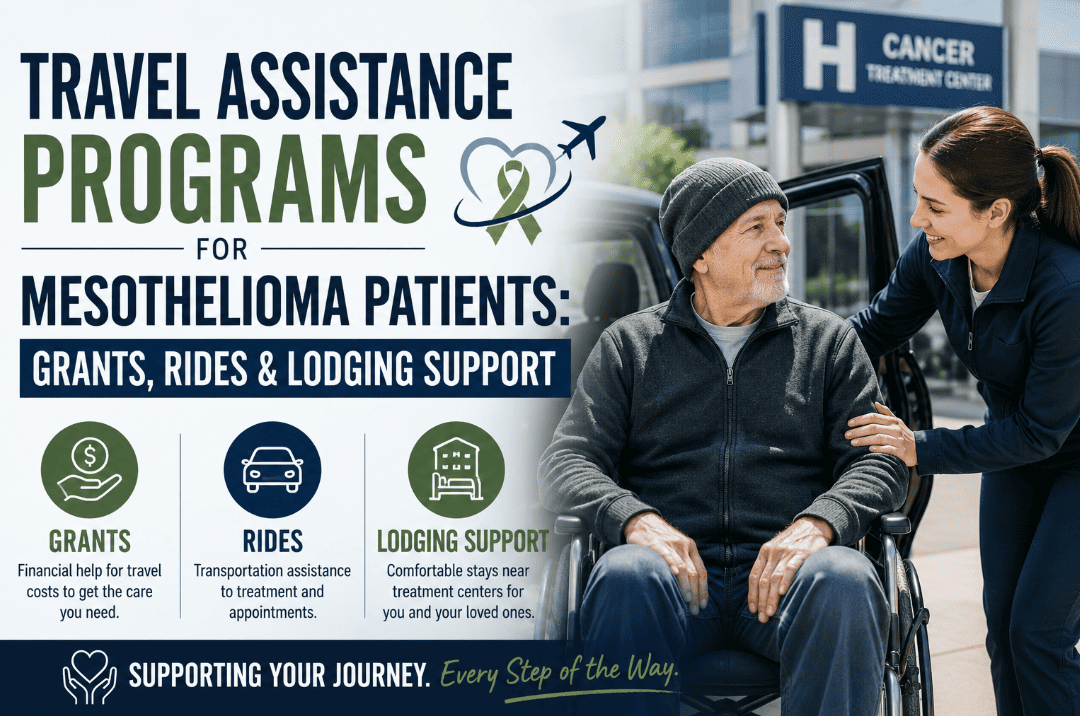
Mesothelioma care often requires travel. Many patients live far from the handful of centers that specialize in this rare cancer or that run the clinical trials offering newer options. The cost of flights, gas, hotels, and meals can add thousands of dollars to already high medical bills. Travel assistance programs exist to reduce that burden so patients can focus on treatment instead of logistics.
These programs come from nonprofits, national cancer organizations, and volunteer pilot groups. They cover different pieces of the journey—local rides, long-distance flights, lodging discounts, or direct reimbursement for travel expenses. Eligibility rules vary, but most ask for a confirmed diagnosis and some documentation of need. Combining several programs often provides the most complete support.
This guide outlines the main options available to patients in the United States, how they work, who qualifies, and practical steps for applying.
Why Specialized Travel Support Matters
Mesothelioma treatment frequently involves multimodal care—surgery, chemotherapy, immunotherapy, or trial enrollment—available at a limited number of high-volume centers. Patients from rural areas or smaller cities may need to travel hundreds of miles for an initial consultation or repeated visits. Even urban patients sometimes face long drives or flights when their local hospital lacks the right expertise.
Out-of-pocket travel costs add up quickly. A single round-trip flight plus several nights in a hotel near a major cancer center can exceed $1,000. Multiply that by multiple trips and the financial pressure grows. Programs that reimburse expenses or provide free transportation and discounted lodging help keep treatment on schedule. They also reduce stress for patients whose energy is already limited by the disease and its therapies.
Mesothelioma Applied Research Foundation Patient Travel Grant
The Mesothelioma Applied Research Foundation runs a travel grant program created specifically for people with this diagnosis. It reimburses eligible expenses for one initial consultation with a mesothelioma specialist or for trips related to participation in an interventional clinical trial listed on clinicaltrials.gov.
Patients can receive up to $1,000 per trip. The lifetime maximum across all trips is $6,000, and the program limits support to no more than two clinical trials. Covered costs include lodging, plane or train tickets, gas (not mileage), rideshares, taxis, and parking. Standard treatment such as routine chemotherapy outside a trial does not qualify.
To apply, contact the foundation first for pre-approval. Once eligibility is confirmed, complete the online application and submit a medical authorization form signed by the treating physician. Expenses must be documented and submitted within 30 days. Funds are usually paid by electronic transfer to the patient.
This program is valuable because it is disease-specific and can support both the first specialist visit and ongoing trial travel.
American Cancer Society Road to Recovery
The American Cancer Society operates Road to Recovery, a nationwide network of volunteer drivers who provide free rides to cancer-related medical appointments. The service is available in most communities, though coverage depends on local volunteer availability.
Patients request rides by calling 1-800-227-2345 or through their local ACS office. Rides are intended for treatment appointments, not general errands. A caregiver may need to accompany patients who require assistance walking. Requests should be made several business days in advance whenever possible.
Road to Recovery works especially well for frequent local or regional appointments. It removes the need to drive while fatigued or to pay for taxis and parking. In some areas the Society also partners with ride-share services or provides transportation grants to healthcare systems.
CancerCare Transportation Assistance
CancerCare offers limited financial grants that can help with transportation costs. Support may include gas cards, public transit passes, or reimbursement for rides. Grant amounts typically range from a few hundred dollars and depend on available funding and demonstrated need.
Eligibility requires a confirmed cancer diagnosis, U.S. residency, active treatment, and household income within the organization’s guidelines (often tied to a multiple of the federal poverty level). Patients begin by calling the CancerCare Hopeline at 1-800-813-HOPE (4673) and speaking with an oncology social worker. The social worker completes an intake and determines current funding availability.
CancerCare also provides counseling and other practical support, so the conversation often covers more than transportation alone.
Air Charity and Volunteer Pilot Programs
For longer distances, several organizations arrange free or low-cost flights.
Angel Flight networks and similar groups use volunteer private pilots to transport ambulatory patients who need to travel for medical care. Patients generally must be medically stable, able to board a small aircraft with minimal assistance, and traveling for necessary treatment. Financial need is usually required. Requests are submitted online or by phone; scheduling depends on pilot availability and typically needs several days’ notice.
Corporate Angel Network arranges seats on corporate aircraft flying empty legs. The service is open to cancer patients (and bone-marrow or stem-cell donors/recipients) who are ambulatory and do not require medical support during the flight. There is no financial-need test, and patients may travel as often as necessary. Corporate Angel Network does not cover ground transportation or lodging.
These flight programs are especially useful for patients living far from major treatment centers who cannot manage commercial air travel costs or the physical demands of airport processes.
Lodging Support Through Joe’s House and Related Options
Joe’s House is not a physical residence. It is a nonprofit directory that lists hotels, apartments, and other lodging near cancer centers and hospitals across the country. Many listings offer discounted rates for patients and caregivers. Users search by city or by proximity to a specific treatment facility.
Joe’s House itself does not provide cash grants, but the discounts can significantly lower the cost of multi-night stays. Some partner properties also offer free nights under certain conditions. Additional lodging help sometimes comes through American Cancer Society Hope Lodge locations (when available) or hospital-based housing programs.
Other Useful Resources
Accessia Health and similar organizations have offered transportation grants for cancer patients in the past; availability fluctuates with funding. Mercy Medical Angels provides both ground and air options for qualifying patients who meet distance and financial criteria. Local hospital social workers and state Medicaid transportation programs can fill gaps for shorter trips.
Veterans with service-connected asbestos exposure may also explore VA travel benefits for appointments at VA facilities or authorized non-VA care.
How to Apply Successfully
Start by identifying the specific travel need—local rides, a one-time specialist consult, repeated trial visits, or overnight stays. Match the need to the program designed for it.
Gather documents early: a letter or form confirming the mesothelioma diagnosis, a treatment plan or trial enrollment letter, travel dates and estimated costs, and basic income information if the program requires it. Many programs ask for receipts after the trip for reimbursement.
Contact the organization before traveling whenever pre-approval is required. Keep copies of every submission and follow up politely if processing times stretch. Oncology social workers at treatment centers are often familiar with these programs and can help complete forms or write supporting letters.
Stacking assistance is common and usually allowed. A patient might use Road to Recovery for local chemo appointments, a Meso Foundation grant for a specialist consult, an Angel Flight for a long-distance trial enrollment, and Joe’s House discounts for lodging.
Practical Tips for Patients and Caregivers
Apply as soon as travel plans firm up. Funding is limited and some programs operate on a first-come basis. Maintain a simple folder or digital file with diagnosis papers, appointment confirmations, and expense records. Ask the treatment team whether the center itself has partnerships that can reduce lodging or parking costs. When flying commercially, check airline medical policies and request any needed accommodations in advance.
Travel during treatment can be tiring. Plan rest days when possible and confirm that the destination has access to medical support if complications arise. Keep emergency contacts and a current medication list handy.
Frequently Asked Questions
Does the Meso Foundation cover routine chemotherapy travel?
No. The Patient Travel Grant is limited to an initial specialist consultation or travel for interventional clinical trials.
Is Road to Recovery available everywhere?
It operates in most communities, but availability depends on local volunteer drivers. Call the American Cancer Society to check your area.
Can I receive free air transportation if I can still fly commercially?
Some programs, such as Corporate Angel Network, do not require financial need. Others focus on patients who cannot afford commercial tickets or who need a less physically demanding option.
Do I have to pay for lodging even with assistance?
Most programs reduce costs through discounts or limited reimbursements rather than covering every night free of charge. Combining resources helps.
How far in advance should I request a ride or flight?
Local volunteer rides usually need several business days’ notice. Charity flights often require one to two weeks for coordination and medical clearance.
Are caregivers covered?
Many programs allow one caregiver to travel with the patient. Confirm the specific rule for each organization.
What if my income is too high for need-based grants?
Some services, such as Corporate Angel Network flights and certain lodging discounts, do not require financial-need documentation.
Internal and External Linking Suggestions
Internal links:
- Link “mesothelioma treatment centers” to a page listing major specialty hospitals.
- Link “clinical trials for mesothelioma” to a guide on finding and enrolling in trials.
- Link “financial assistance for mesothelioma” to a broader compensation and grants overview.
- Link “VA benefits for veterans” to a veterans-specific resource.
External authoritative links:
- Mesothelioma Applied Research Foundation travel grant page.
- American Cancer Society Road to Recovery information.
- CancerCare financial assistance and Hopeline.
- Corporate Angel Network and regional Angel Flight organizations.
- Joe’s House lodging directory.
- National Cancer Institute or clinicaltrials.gov for trial location details.
Moving Forward with Less Financial Strain
Travel should not be the reason a patient misses a specialist visit or a promising trial. The programs described here exist precisely to remove that barrier. Start with a phone call or online form, gather the required documents, and lean on social workers and patient navigators for help. Many people successfully combine local rides, flight assistance, and lodging discounts to make specialized care reachable.
This information is general and based on publicly available program details. Rules and funding can change. Always confirm current eligibility and processes directly with each organization. Professional medical and financial advice tailored to individual circumstances remains essential.