Asbestos was widely used by the U.S. military for decades because of its heat resistance and fireproofing qualities. Service members who worked on ships, aircraft, vehicles, and base facilities often came into contact with the material. Although new uses of asbestos have been restricted, the effects of past exposure continue to appear among veterans. Understanding where asbestos was used, which roles carried higher risk, the diseases that can result, and the benefits and legal options available helps veterans and their families take informed steps.
Asbestos Use Across Military Branches
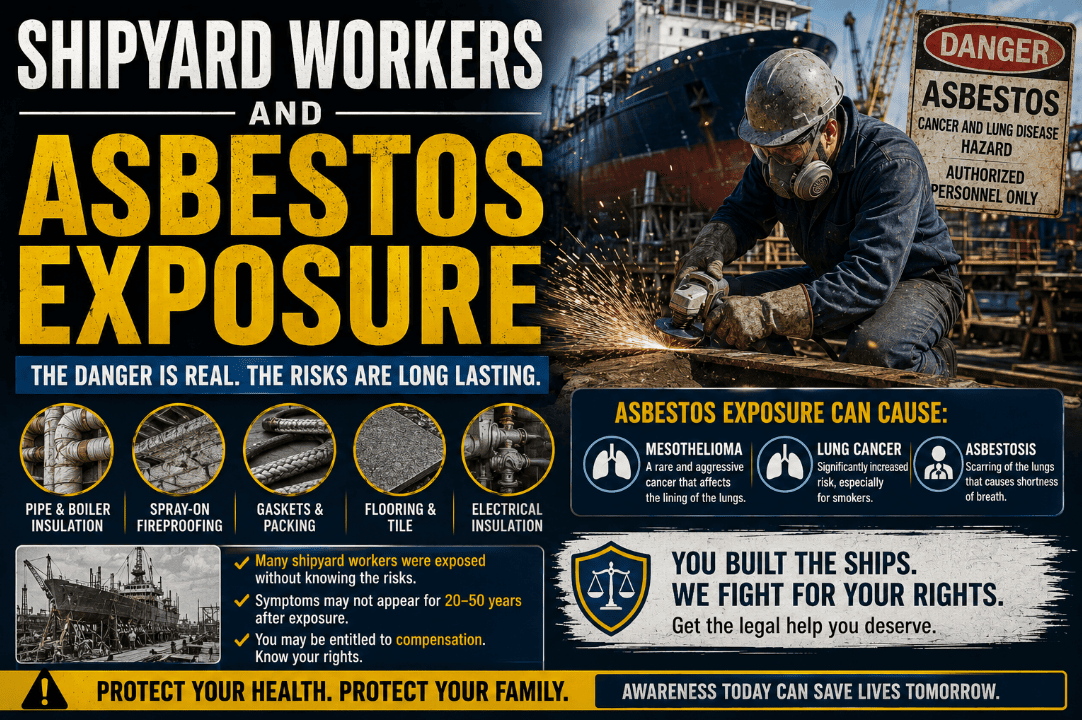
From the 1930s through the 1970s, asbestos appeared in many military applications. It insulated boilers, pipes, and engines on naval vessels. It was used in aircraft and vehicle components, gaskets, brakes, and fireproofing materials. Barracks, shops, and other base structures often contained asbestos in insulation, ceiling tiles, flooring, and cement products.
The Navy relied on asbestos more heavily than other branches because of the large number of ships built and maintained during World War II and the Cold War. When these materials were cut, ground, repaired, or removed, microscopic fibers could become airborne and be inhaled. Even today, maintenance or decommissioning of older ships and facilities can release residual fibers if proper controls are not followed.
Military Roles with Higher Exposure Risk
Certain assignments placed service members in closer or more frequent contact with asbestos-containing materials:
- Navy sailors and shipyard personnel who worked in engine rooms, boiler spaces, or on insulation and gaskets
- Marines who served aboard ships or lived in older barracks
- Army and Air Force mechanics who handled brakes, clutches, gaskets, and engine parts
- Construction, engineering, and facilities personnel who installed or repaired insulation and structural materials on bases
- Support staff who worked in older buildings where deteriorating materials released dust
Veterans who served during World War II, the Korean War, and the Vietnam era are more likely to have encountered asbestos because of the volume of material used in those years. Secondary exposure also occurred when fibers clung to clothing and were brought home.
Health Conditions Linked to Military Asbestos Exposure
Inhaled asbestos fibers can remain in the lungs for decades. Over time they may contribute to:
- Mesothelioma, a cancer of the lining of the lungs or abdomen that usually appears 20 to 50 years after first exposure
- Lung cancer, with risk further elevated among smokers who also had asbestos contact
- Asbestosis, progressive scarring of lung tissue that impairs breathing
Common symptoms include persistent cough, chest pain or tightness, shortness of breath, unexplained fatigue, and weight loss. Because these signs can develop long after service ended, veterans with relevant work histories should mention possible asbestos exposure during medical visits.
Diagnosis and Care Options
Evaluation typically begins with a detailed service and occupational history, followed by imaging such as chest X-rays or CT scans. A biopsy is usually required to confirm mesothelioma or other asbestos-related disease. Staging helps determine how far the condition has progressed and guides treatment planning.
Treatment may include surgery, chemotherapy, radiation, immunotherapy, or combinations of these approaches. Supportive care focuses on managing symptoms and maintaining quality of life. The Department of Veterans Affairs (VA) provides healthcare for eligible veterans, including monitoring and treatment for asbestos-related conditions that are determined to be service-connected.
Reducing Further Exposure and Monitoring Health
Although past exposure cannot be undone, current safety practices limit additional contact:
- Asbestos-awareness training for personnel who may encounter older materials
- Properly fitted respirators and protective clothing during maintenance or renovation work
- Material testing and identification before disturbing suspect insulation or components
- Engineering controls such as wet methods and ventilation to reduce airborne dust
- Regular medical check-ups for veterans with known or suspected past exposure
The VA encourages eligible veterans to enroll in healthcare and discuss their service history with providers so appropriate screening can be considered.
Benefits and Legal Options Available to Veterans
Veterans with asbestos-related illnesses may qualify for several forms of support:
- VA disability compensation when the condition is determined to be connected to military service
- VA healthcare for evaluation and treatment
- Claims against private manufacturers or suppliers of asbestos products (these lawsuits do not involve the government and do not affect VA benefits)
- Asbestos bankruptcy trust funds established by companies that filed for bankruptcy
Filing a VA claim generally requires documentation of service (such as a DD-214) and medical evidence linking the illness to exposure during service. Private legal claims have separate time limits that vary by state and typically begin from the date of diagnosis or from the date the connection to asbestos was reasonably discovered. An attorney familiar with both VA claims and asbestos litigation can help clarify the options that apply to an individual situation.
Historical Context and Practical Challenges
The military used asbestos extensively because it performed well under harsh conditions. At the time, the long-term health risks were not fully understood or adequately addressed. Many veterans are only now receiving diagnoses decades after their service ended. Locating records that document specific exposure can be difficult, and navigating benefit systems requires patience and accurate documentation.
Steps Veterans Can Take
- Gather service records and any available information about ships, bases, or jobs that involved potential asbestos contact
- Schedule a medical evaluation that includes discussion of military asbestos exposure
- Contact the VA to explore disability and healthcare benefits
- Consider consulting an attorney experienced in asbestos cases if private claims or trust-fund options appear relevant
- Connect with veteran support organizations that provide information and peer resources
Awareness of past military asbestos use, timely medical attention, and clear information about benefits and legal pathways give veterans and their families more control over the practical consequences of exposure. This article is for educational purposes only and is not a substitute for professional medical or legal advice. Individual circumstances differ, and qualified professionals should be consulted for personal guidance.