
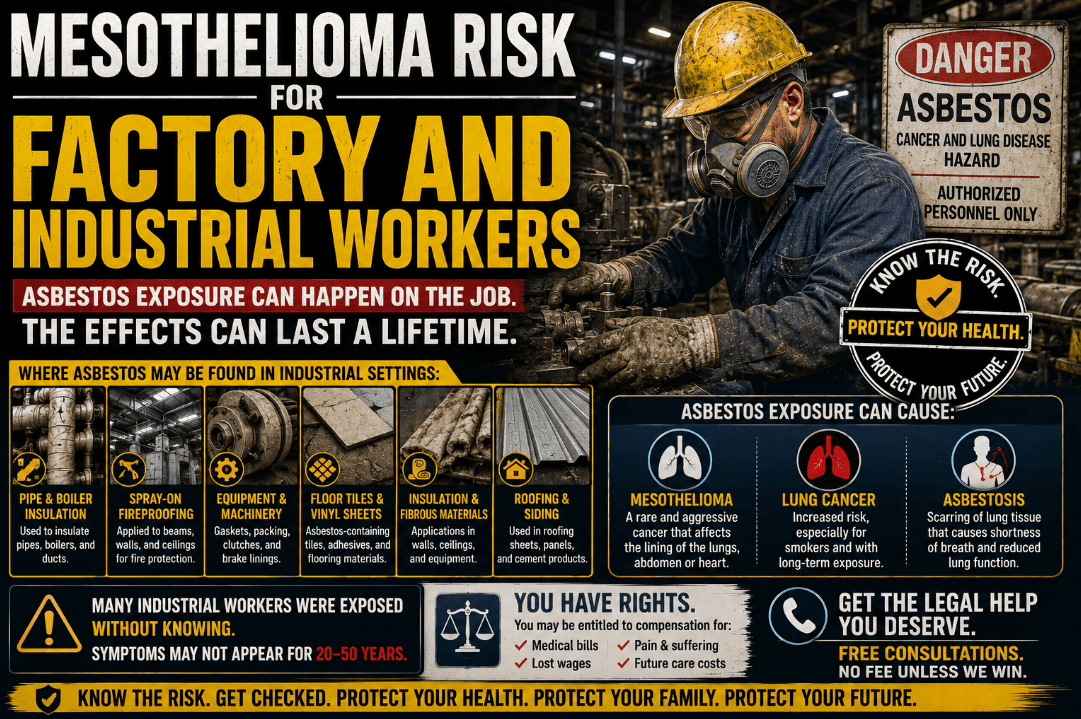
Mesothelioma is a rare, aggressive cancer strongly linked to asbestos exposure. Factory and industrial workers face elevated risk because asbestos was once widely used in manufacturing for its heat resistance and durability. Many older plants and pieces of equipment still contain the material. When it is disturbed during maintenance, repairs, or upgrades, microscopic fibers can become airborne and be inhaled. Understanding the sources of exposure, the diseases that can result, practical safety measures, and available options after a diagnosis helps workers and families respond effectively.
What Mesothelioma Is
Mesothelioma develops in the mesothelium, the thin protective lining that covers the lungs, abdomen, heart, and other organs. The most common form among industrial workers is pleural mesothelioma, which affects the lining of the lungs. Peritoneal mesothelioma, which occurs in the abdomen, is less frequent. Asbestos fibers that lodge in this tissue can cause chronic irritation and, over many years, cancerous changes. The disease typically has a latency period of 20 to 50 years, so symptoms often appear long after the original exposure. Roughly 3,000 new cases are diagnosed each year in the United States, and occupational exposure accounts for the large majority.
Why Factory and Industrial Work Carries Higher Risk
From the 1930s through the 1970s, asbestos was common in the production of textiles, cement products, chemicals, and industrial machinery. Even after regulations limited new uses, older facilities and equipment retained asbestos in insulation, gaskets, and other components. Workers who perform maintenance, overhauls, or plant upgrades can still encounter these materials.
Contributing factors include:
- Direct handling or disturbance of asbestos-containing insulation, textiles, or cement products
- Limited ventilation in older factory spaces that can allow dust to linger
- Historical lack of protective equipment and awareness before modern safety standards
- Secondary exposure when fibers travel home on clothing or tools
These conditions keep the risk relevant for workers in aging industrial settings.
Common Sources of Asbestos in Factories and Industrial Plants
Materials that frequently contained asbestos include:
- Insulation around boilers, ovens, pipes, and turbines
- Textile machinery components such as belts and fabrics
- Asbestos-reinforced cement panels and pipes
- Gaskets, seals, and packing materials in valves and equipment
- Certain fire-resistant protective clothing used in high-heat areas
Cutting, grinding, or removing these materials can release fibers unless proper controls are in place.
Health Conditions Linked to Industrial Asbestos Exposure
Inhaled asbestos fibers can remain in the body for decades and may lead to:
- Mesothelioma, a cancer of the lining of the lungs or abdomen
- Lung cancer, with risk further increased among smokers who also had asbestos contact
- Asbestosis, progressive scarring of lung tissue that makes breathing difficult
Early symptoms are often nonspecific. Persistent cough, chest or abdominal pain, shortness of breath, unexplained fatigue, weight loss, or fluid buildup should prompt medical evaluation, especially when a person has a history of factory or industrial work.
Diagnosis and Treatment Overview
Evaluation usually begins with a detailed work history, followed by imaging such as chest X-rays, CT scans, or PET scans. A biopsy provides the definitive diagnosis by examining tissue under a microscope. Staging determines how far the disease has spread and helps guide treatment decisions.
Treatment options may include surgery to remove visible tumor, chemotherapy, radiation, immunotherapy, or combinations of these approaches. Supportive care focuses on relieving symptoms and maintaining quality of life. Outcomes vary depending on the type of mesothelioma, stage at diagnosis, and the patient’s overall health.
Practical Prevention Steps for Factory and Industrial Workers
Reducing exposure remains the most effective protection:
- Complete asbestos-awareness training required by OSHA
- Use properly fitted respirators and protective clothing when working around suspect materials
- Apply engineering controls such as wet methods and local exhaust ventilation to limit dust
- Request material testing and identification before disturbing older insulation or equipment
- Participate in regular medical monitoring programs when past exposure is known
Employers are responsible for identifying asbestos-containing materials, providing appropriate equipment, and enforcing safe work practices. Workers should report damaged or deteriorating materials promptly.
Legal Options After an Asbestos-Related Diagnosis
When mesothelioma or another asbestos-related disease develops after industrial exposure, affected individuals and families may have pathways to seek compensation. These can include claims against manufacturers or suppliers of asbestos products and, in some situations, asbestos bankruptcy trust funds established by companies that filed for bankruptcy. Workers’ compensation may cover certain medical costs, though it often has limits. Time limits for filing claims vary by state and generally begin from the date of diagnosis or from the date the connection to asbestos was reasonably discovered. An attorney experienced in asbestos litigation can review the work history and explain available options and deadlines.
Historical Context and Ongoing Challenges
Factories produced large volumes of asbestos-containing goods for decades. Many companies continued to use the material after health risks were known. The resulting illnesses have led to extensive litigation and the creation of trust funds intended to compensate victims. Today the main challenges are locating records of exposure that occurred long ago and ensuring modern safety rules are followed as older plants are upgraded or closed.
Steps Workers Can Take
- Document job sites, tasks, and approximate periods of possible asbestos contact
- Discuss any relevant work history with a physician and request appropriate screening
- Explore compensation options through qualified legal counsel if a diagnosis is confirmed
- Connect with support organizations that provide information and resources for people affected by asbestos-related disease
Awareness of the common sources of asbestos in industrial settings, consistent use of protective practices, and prompt medical attention if symptoms appear give workers the best chance of limiting further harm. After a diagnosis, documenting the occupational history and consulting experienced counsel can clarify pathways to financial support for medical care and related costs.
This information is provided for educational purposes only and is not a substitute for professional medical or legal advice. Individual circumstances differ, and qualified professionals should be consulted for personal guidance.